Canada’s aerospace industry: Global powerhouse enters a new era
Author details
William Thomas
Senior Associate | Country & Sector Intelligence
In this article:
- From pandemic disruption to aerospace industry recovery
- Aerospace exports and Canada’s key industry strengths
- Key aerospace export markets and trade risks
- Export diversification opportunities for Canada’s aerospace industry
- Canada’s aerospace industry positioned for strategic growth
- How EDC can support Canadian aerospace exporters
Canada’s aerospace sector remains one of the most globally competitive and technologically advanced industries—anchoring high‑skilled employment, driving innovation and positioning Canada as a critical player in international supply chains.
As the industry moves beyond years of pandemic‑related disruptions, rising defence spending, evolving sustainability priorities and renewed investment in advanced manufacturing are reshaping its long‑term trajectory.
Canada is among the world’s leading aerospace nations—ranking in the Top 4 in civil flight simulators (No. 1), engines (No. 3) and aircraft (No. 4) segments—contributing nearly $34 billion to gross domestic product (GDP) in 2024 and supporting about 225,000 jobs.
The aerospace industry also invests more in research and development (R&D) than any other manufacturing sector in Canada—nearly three times the manufacturing R&D average. This strong innovation focus helps Canadian firms lead globally in areas such as business jets, turboprop engines, flight simulators, advanced aircraft components and space robotics, embedding them in major aircraft programs worldwide.
With a dedicated aerospace team of eight experts and more than 100 years of combined industry experience, Export Development Canada (EDC) has supported Canada’s aerospace sector since the 1960s. According to Peter Johnston, director of EDC’s aerospace team:
“The aerospace sector is a key driver of Canada’s economy, supporting skilled jobs and advanced manufacturing. But U.S. tariffs, labour shortages and supply chain pressures are testing the resilience of Canadian companies. EDC helps firms manage these risks and access the financing and connections they need to stay competitive globally.”
You should also check out
With growing risks, Canadian companies face new challenges. EDC’s Global Economic Outlook offers insights to help you make better business decisions.
The COVID-19 pandemic triggered an unprecedented collapse in global air traffic—driving production slowdowns, layoffs and exposing deep supply chain vulnerabilities. After two subdued years, global air traffic rebounded sharply, sending demand for aircraft and parts soaring as airlines struggled to accommodate surging passenger volumes.
Aerospace production ramped up but continued to face challenges tied to the industry’s highly global and complex supply chains. Delays or shortages at any point created compounding knock-on effects that slowed deliveries across the system.
As aircraft order backlogs ballooned to 13.5 years of production—roughly three times the historic average—airlines leaned heavily on older fleets, driving strong demand for aftermarket maintenance, repair and overhaul (MRO) services.
By 2025, conditions began to stabilize. Globally, the sector surpassed pre-pandemic performance, with Accenture estimating commercial aerospace revenue growth of around 12%, supported by strong aircraft deliveries and sustained MRO momentum. Airbus continued to meet delivery growth targets, while Boeing stabilized production after years of safety and quality challenges, signalling a ramp-up in 2026.
These developments remain broadly positive for Canadian suppliers—although ongoing bottlenecks still require careful management.
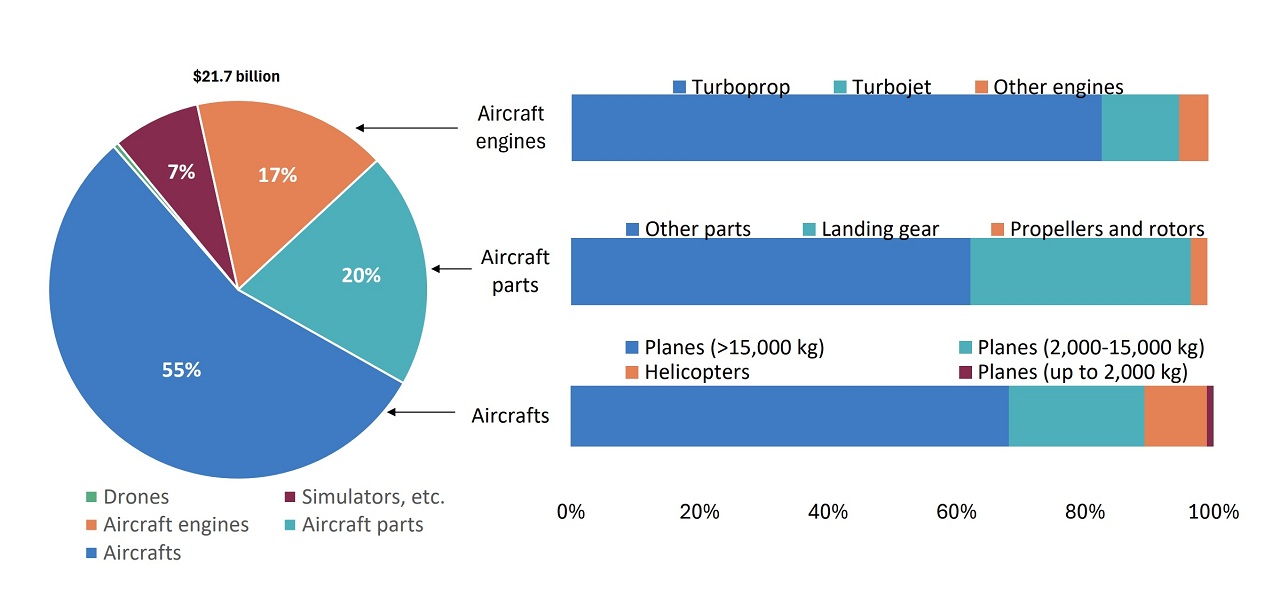
Figure 1: Canadian aerospace exports, 2024 (nominal, customs basis)
Source: Canadian International Merchandise Trade (CIMT) dataset
Note: Values are nominal, customs‑basis. Estimates are below AIAC equivalents, as the CIMT data definition is narrower. Simulator, etc. includes arrestors and launchers.
Canada’s aerospace strength is concentrated in business aviation, propulsion, simulators, space robotics and aftermarket services.
- Aircraft: Aircraft deliveries account for roughly 45% (Figure 1, above) of Canada’s aerospace exports, with large aircraft (above 15,000 kilograms) making up the majority, including Bombardier’s Global jet family and Airbus A220s. Bombardier remains a cornerstone of the business jet industry, supported by record backlogs, favourable U.S. tax incentives under the Big Beautiful Bill and significant growth in higher‑margin aftermarket services.
- Engines: Propulsion products represent another major export category, with companies such as Pratt & Whitney Canada positioning the country at the forefront of sustainable aviation, hybrid‑electric propulsion and fuel‑efficiency initiatives.
- Simulators and training: Canada’s world‑leading simulator cluster, anchored by CAE, continues to benefit from global pilot shortages and strong demand for training and maintenance solutions.
- Advanced components and space robotics: Canadian firms are deeply embedded in global supply chains for advanced components such as rotors, landing gear and avionics. In space systems, MDA Space has reinforced Canada’s leadership through expanded satellite and lunar‑support capabilities.
- Aftermarket: Extended use of aging fleets has pushed Accenture’s global MRO spending growth projections up to about 14% for 2025—benefiting Canadian firms with deep expertise in maintenance, repair and engine overhaul.
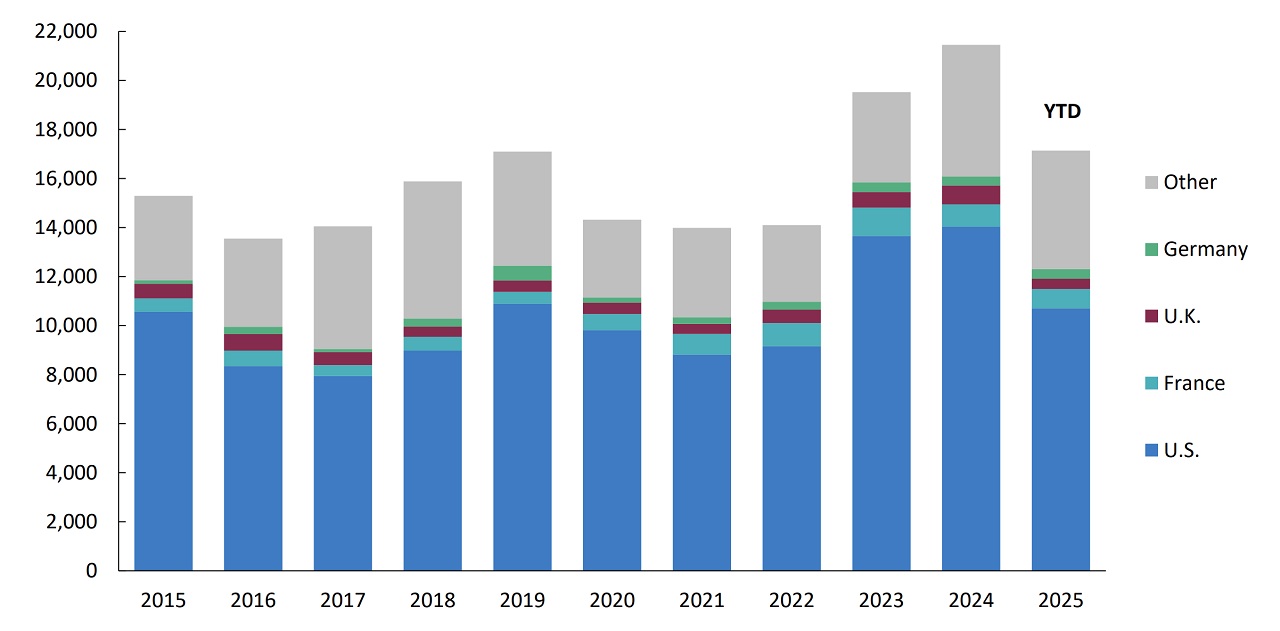
In 2024, Canada exported nearly $27 billion in aerospace goods to 166 countries, with more than 70% of industry revenue tied to international markets. The aerospace industry is highly globalized due to the complexity and capital intensity of aircraft manufacturing. The United States remains the dominant buyer, accounting for 63% of Canadian aerospace exports, led by aircraft, engines and parts.
Figure 2: Canadian aerospace exports by top destinations (millions, nominal C$)
Source: Canadian International Merchandise Trade (CIMT) dataset
Note: YTD uses available data (up to October). Values are nominal, customs‑basis. Estimates are below AIAC equivalents, as the CIMT data definition is narrower.
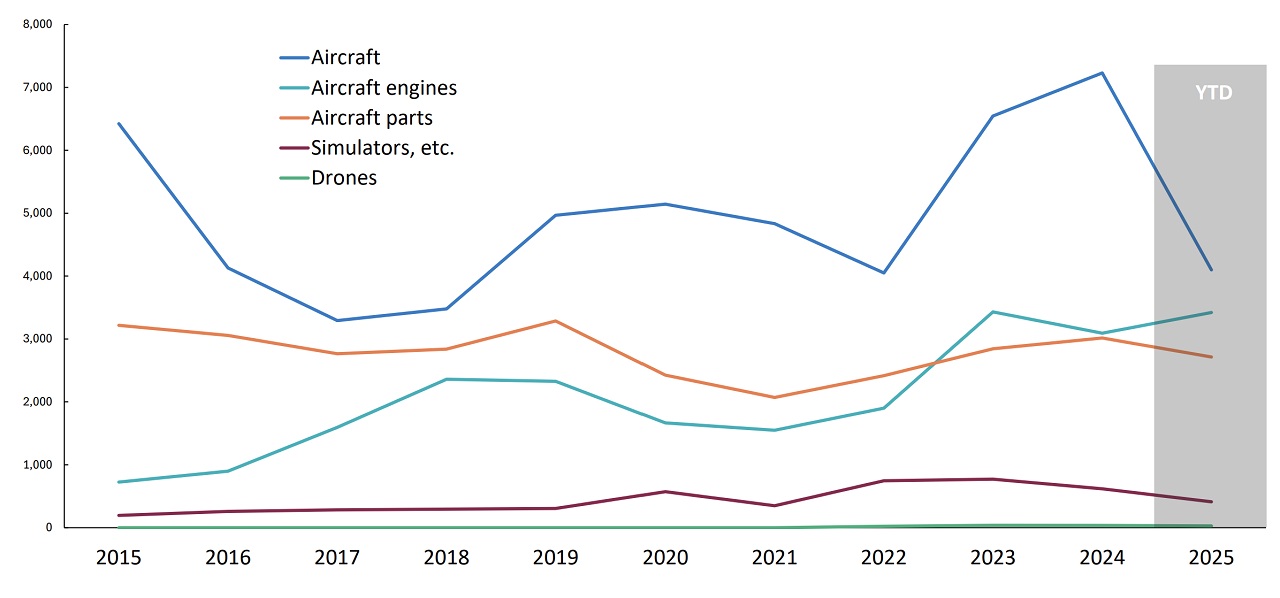
Integration into U.S. supply chains amplifies growth during American production surges but exposes Canadian firms to regulatory changes and policy uncertainty. While goods compliant with the Canada-United States-Mexico Agreement (CUSMA) remain largely exempt from U.S. tariffs—and Canada faced the lowest effective U.S. tariff rate among major trading partners in 2025—compliance requirements continue to impose administrative burdens.
Figure 3: Canadian aerospace exports to the U.S. by product (millions, nominal C$)
Source: Canadian International Merchandise Trade (CIMT) dataset
Note: YTD uses available data (up to October). Values are nominal, customs‑basis. Simulator, etc. includes arrestors and launchers.
The 2026 CUSMA review this summer introduces new uncertainty. Any tightening of rules of origin or weakening of tariff exemptions could raise costs, disrupt supply chain co-ordination and delay investment decisions. Failure to reach an agreement could also lead to annual renegotiation cycles, increasing operational risk across North American aerospace manufacturing. For additional analysis on managing risk exposure in the U.S. market, read EDC’s United States market intelligence.
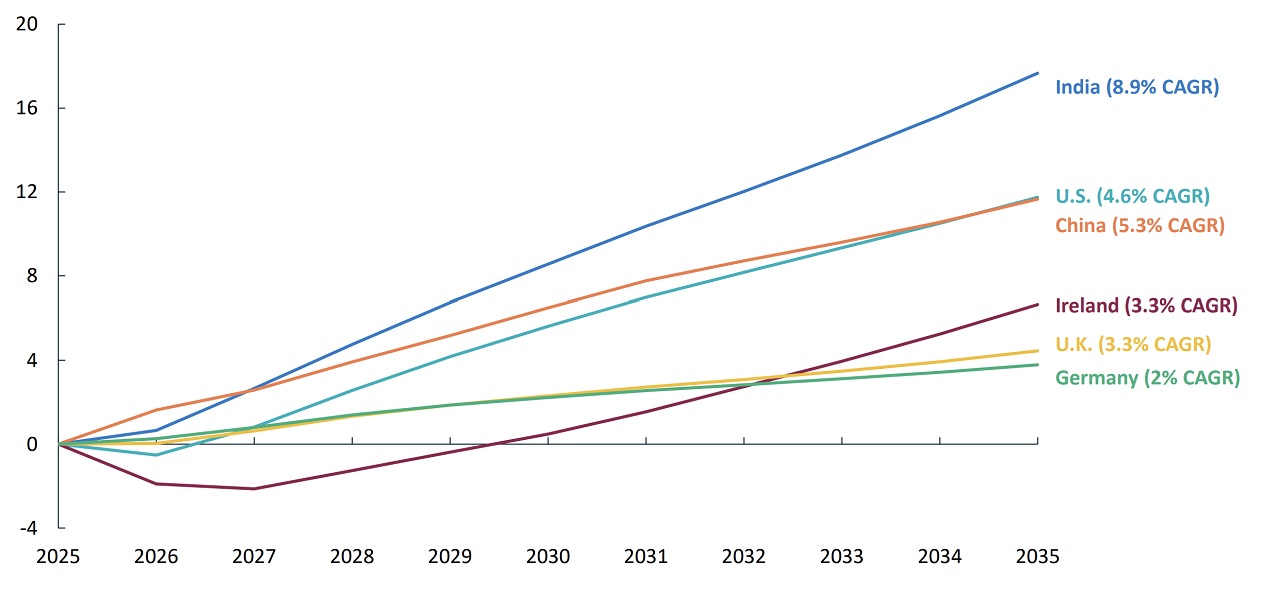
Despite ongoing headwinds, significant growth opportunities remain. Emerging markets such as India and China are expected to drive substantial aircraft demand growth over the next decade, while established markets including the U.S., United Kingdom (U.K.), and Germany will continue to support stable growth. This broad‑based expansion presents export diversification opportunities for Canadian suppliers.
Figure 4: Countries with the largest projected aircraft import demand growth
Source: Oxford Economics Trade Prism
Note: Values are nominal imports of aircraft (e.g., HS 8802)

EDC’s revealed comparative advantage (RCA) analysis highlights several advantages for Canadian aerospace and points to untapped export potential in markets such as the United Arab Emirates (UAE), Australia, South Korea, Portugal, Singapore, Sweden and South Africa. These economies are undergoing fleet modernization cycles that align with Canada’s strengths in business jets, propulsion systems and advanced components.
Together, rising global demand and Canada’s comparative advantages position the sector for more diversified and resilient export growth.
With strong R&D intensity, world‑leading companies and expanding international demand, Canada’s aerospace sector is well positioned for long‑term growth. It remains a vital engine of the Canadian economy, supporting high‑skilled jobs, export performance and industrial resilience.
Risks persist—from the 2026 CUSMA review to supply chain constraints and labour shortages—but with proactive risk management and targeted support, Canadian aerospace firms are well placed to capture opportunities in global aviation, defence and space markets.
Navigating global aerospace markets requires more than strong products—it takes timely intelligence, trusted partners and effective risk management. EDC works with Canadian aerospace companies to help them manage uncertainty, pursue new markets and compete globally.
EDC provides:
- Market intelligence and analysis to help exporters assess demand, policy shifts and supply chain risks across key global markets, including Europe and the Indo‑Pacific
- Financing and risk‑management solutions to support growth, protect cash flow and manage commercial and political risk
- Business Connections and advisory support to help firms build relationships with international buyers, partners and financial institutions
To explore opportunities in Europe, access EDC’s in‑depth Europe market intelligence, which draws on insights from EDC’s in‑market teams across the European Union and U.K. EDC’s Indo-Pacific market intelligence also provides analysis on business conditions, risks and opportunities across fast-growing markets.
New to EDC? Visit Export Help Hub to connect with a trade advisor and learn how we can support your export strategy. Already an EDC customer? Contact your relationship manager to discuss how current global developments may affect your business, or call 1-800-229-0575.
Acknowledgements
We extend our thanks to the subject matter experts at Moody’s and the Aerospace Industries Association of Canada (AIAC), who contributed insights that strengthened the accuracy and depth of this report.