Critical minerals create Canada-Nordic opportunities
Critical minerals are one of the clearest areas for Canada-Nordic collaboration. As demand grows for inputs used in batteries, semiconductors and clean technologies, Finland, Sweden and Norway are taking on a larger role in Europe’s drive to secure supply.
The Nordic region hosts 11 of the 47 strategic projects approved under the European Union’s Critical Raw Materials Act. That concentration underscores the region’s growing importance to Europe’s critical minerals supply chains.
Canada brings abundant resources, a mature mining ecosystem and a reputation for responsible business practices. The opportunity for exporters extends well beyond raw materials to mining technologies, specialized goods and services, and environmental solutions.
Clean energy opens opportunities for Canadian exporters
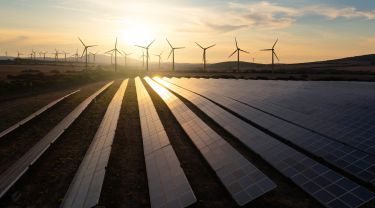
The Nordics are already well ahead in the energy transition. In 2023, renewables supplied 61.6% of the region’s gross final energy consumption, well above the European Union’s 2030 benchmark of 42.5%. Each Nordic country exceeded that benchmark, drawing on strengths that range from hydropower and geothermal energy to wind and bioenergy.
Canada attracted about US$35 billion in clean energy and electrification investment in 2024, according to BloombergNEF, placing it among the world’s Top 10 destinations for energy-transition investment. That expertise positions Canadian companies to support Nordic investment in electrification, hydrogen, energy storage and infrastructure, including through grid solutions, energy efficiency technologies and industrial decarbonization services.
Defence and Arctic security create new opportunities
Defence spending is rising across Denmark, Finland, Norway and Sweden as the security environment grows more complex. NATO estimates that their combined spending increased by nearly 35% between 2024 and 2025, reaching approximately US$56.4 billion.
Canada and the Nordics are also deepening their defence and Arctic-security ties. Through the Icebreaker Collaboration Effort, Canada, Finland and the United States are working to design, build and market Arctic and polar vessels, including icebreakers. The partnership spans information sharing, workforce development, research and development, and the shipbuilding supply chain—from engineering and marine equipment to systems and software.
Canada-Norway co-operation is already generating commercial partnerships. A $9.6-million contract was awarded to Kongsberg Vanguard LP, a joint venture involving Ottawa-based Adaptive Marine Solutions and Norway’s Kongsberg Defence & Aerospace and Salt Ship Design, to design the Canadian Coast Guard’s future mid-shore multi-mission vessels.
The bottom line: Small markets, big export potential
Individually, the Nordic countries are relatively small. Together, they form a sizeable, sophisticated market whose companies are investing in strategic industries and connecting deeply with European and global supply chains.
For Canadian exporters pursuing diversification strategies, the strongest openings are in critical minerals, clean technology, energy infrastructure, defence and Arctic capabilities. The key is to approach the Nordics not simply as five end markets, but as innovation-driven partners and potential entry points into broader European value chains. Export Development Canada (EDC) is also expanding its presence in the region by opening representation in Stockholm, Sweden, to help Canadian exporters diversify, pursue new opportunities and strengthen commercial ties.
A very special thanks this week to Hani Wannamaker, analyst in EDC’s Economics department.
As always, EDC Economics values your feedback. If there are topics you’d like us to explore, email us at economics@edc.ca, and we’ll do our best to cover them.