
EP 17
Fostering trade expertise for export success
Apr. 17, 2024

Succeeding internationally in a niche industry
Our host, Joe Mimran, chats with Caroline Tompkins of the Forum for International Trade Training (FITT) and Trish Tully of Survival Systems Limited (SSL), a Canadian company that manufactures emergency egress simulators to save lives when aircraft crashes, or a vehicle is overturned in water. Learn how businesses can build in-house trade expertise and optimize growth abroad while operating in a niche industry.
Where to listen
Follow us on your favourite streaming platforms to never miss an episode of the Export Impact Podcast. Tune into our podcast for new episodes every second Wednesday at 6 a.m. ET.


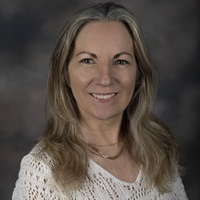
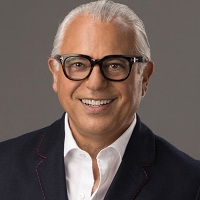
Joe Mimran (00:00): Hello, I'm Joe Mimran and welcome back to the Export Impact Podcast. This week, we're delighted to be joined by two incredible women whose wealth of knowledge is sure to be an asset to any business owner. Caroline Tompkins is the CEO and president of the Forum for International Trade Training (FITT), a not-for-profit organization dedicated to building the proficiency of businesses, professionals, and students to access global markets, reduce and manage risk of international trade and enable profitable competition.
Trish Tully is the VP of marketing and sales at Survival Systems Limited. SSL is considered the best in world-class design manufacturing and full-suite delivery of simulation technologies for facilitating realistic safety and survival trceaining. SSL's highly sought-after premier product line is the Modular Egress Training Simulator used in the delivery of underwater egress training.
I'd like to begin today's episode by acknowledging that we're recording from my office in Toronto, which is on the traditional unceded territory of many nations, including the Mississaugas of the Credit, the Anishnabeg, the Chippewa, the Haudenosaunee, and the Wendat peoples, and is now home to many diverse First Nations, Inuit and Metis people. We value taking this moment to deepen the appreciation of our Indigenous communities wherever we are, and to remind ourselves of our shared debt to Canada's First Peoples.
Thank you both for joining me today. Caroline, I'm going to start with you and I'd like to understand a little bit more about FITT, how it got started, the genesis for it, and what you offer.
Caroline Tompkins (02:02): Thank you, Joe. It's great to be here. FITT, Forum for International Trade Training, we were incorporated back in 1992, and we were incorporated to create national standards in international trade training. In the late ’80s, early ’90s, the Canadian government was encouraging businesses to get involved in exporting and to expand into new export markets, the U.S plus other export markets. At the same time, there was no training available about the nuts and bolts, the how to do international trade training. FITT was created with that through a joint public-private partnership through the Canadian government and Canadian business to offer this practical training. Our training is practical. It's hands-on. It covers the nuts and bolts of doing international trade. Our primary training program is called FITTskills, and it's based on building the knowledge and skills of people who work for companies that are involved or that plan to be involved in exporting.
When a company is moving a product from one country to another, from Canada to the UK (United Kingdom) or Canada to the U.S., they're exporting, they're doing international business and they're part of the global business community. The FITTskills training program was really designed specifically for the people who work for these companies because when it comes to exporting, a lot of questions come up:
- Will the new opportunity be viable for the company?
- What potential benefit will it bring?
- Do these benefits outweigh the risk because there’ll be risk?
- How do you mitigate those risks?
- Out of the 200 countries in the world, how do you choose one market over another?
- What's the best strategy to enter that market?
- Finance issues come up and how do you reach new customers?
The FITTskills courses and workshops really help people answer all these questions and many, many more. So, we have other training offerings, as well as the FITTskills program.
Joe Mimran (04:01): Is it Canadians only who can use your services?
Caroline Tompkins (04:06): No. Today, we're worldwide. We have clients in more than 50 countries, primarily because we didn't have an export plan, per se. Like many businesses, once you go online and once our training was available, not only in the classroom, but online, we started getting a lot of people very interested in taking FITTskills training. What's interesting about that is as we had more international clients, we started getting feedback from them saying, “It's too Canadian-specific.”
One of the things when you're looking at exporting is you need to adapt your product or your service. And what we looked at about 10 years ago is making it more attractive to international clients, as well. So, we created our training program, FITTskills, to be international in scope, country neutral, so it would be more attractive to people outside of Canada.
Joe Mimran (04:59): Do you charge for your services?
Caroline Tompkins (05:01): We do. We have free services—pre-knowledge-based resources we have with Export Development Canada. In fact, we have the FITTskills Lite series: These are 12 elements of the FITTskills program that people can download and read—whether it's on creating an export plan or the legal aspects of international trade. So, very short topics people can take with video and a PDF in less than an hour. If somebody's interested in looking at exporting, this is a great place to start with the FITTskills Lite series. But the FITTskills program itself, the training, the workshops, we do charge for them.
Joe Mimran (05:39): That's wonderful and at the end of that process, there's a CITP designation?
Caroline Tompkins (05:45): Yes. It's kind of at the end of that process, but more so, we had the certified international trade professional designation, and one of the educational requirements to complete the CITP is the FITTskills diploma. But we also assess other programs as needed that meet FITT standards as pre-requisites, and that they'll satisfy the pre-requisites, as well.
The CITP is another interesting story with Canada. It's through FITT, Canada was really the first country in the world to look at international trade as a profession—not just a transaction that companies do an activity that companies do. We looked at it as a profession. And we did this by creating the professional designation, the CITP-certified international trade professional. So, when a company is seeking to balance their books, they go to an accountant. When they're looking at a contract, they go to a lawyer. So, when a company is looking at going international, why not go to an international trade expert or better yet, create those experts within your company teams?
Joe Mimran (06:49): That's wonderful. So, this is a Canadian designation then, but it's recognized in the international sphere, I imagine?
Caroline Tompkins (06:57): Yes, yes. And right now, we're looking at getting ISO accredited. ISO (International Organization for Standardization) has a particular standard for voluntary professional designations. Of course, CITP is a voluntary designation. We've undergone all the elements to ensure that our CITP practices and policies are ISO compliant and will be applying for ISO later next year.
Joe Mimran (07:21): I got my CA designation, my chartered accountant designation many, many years ago. Why have I not heard of the CITP? Why are you keeping this such a guarded secret? Everybody should know about this.
Caroline Tompkins (07:36): Everybody, every business, should know about this and a lot of people do, but unless you're really looking at exporting or importing, you're not seeking out that information. The other thing is we’re not-for-profit organization. We're a fairly small organization. We punch a lot higher than our weight, but we're 14 people and we have only so many resources. We're not-for-profit—we're not-for-loss either. We're not government-funded anymore. That ended about 10, 12 years ago. We operate very much like a small business. But we're providing a social service through the training and certification.
Joe Mimran (08:12): Interesting. I'm going to jump to Trish. Now, Trish, did you go through this training process?
Trish Tully (08:20): I did indeed. Yes.
Joe Mimran (08:21): So, you’re a CTIP-designated professional. Isn't that wonderful? I looked up SSL and what you do, this focus that you have on knowledge, skills and competencies through this kind of realistic and concrete performance outcomes with simulation equipment. I was looking at some of these helicopter simulations that you did and it's fascinating. Fascinating. Again, such a specialized area. Why don't you tell us a little bit about how you work and who you work with? Small businesses, large businesses, multinationals? I'd love to hear all about it.
Trish Tully (09:07): Sure. Much like Caroline, we're aligned in a lot of ways because she's a trailblazer with regard to the creation of the standard for international trade training and Survival Systems Limited was creating the standard for underwater egress training. Originally, the company started as a training organization, but through the jigs and the reels over time, now, it’s a manufacturer of the Modular Egress Training Simulator. How that came to be, Paul Douglas is currently and has been the owner for the last 10 years, but in 1982, when Survival Systems originally started, it was started by two ex-Air Force military pilots. One of them happened to have had a crash flying commercially and attributes the training that he learned in the background of his military career for him and the copilot having survived that crash.
At that time, in the early ‘80s, there was a lot of offshore activity and there was a disaster that occurred where all lives were lost. So, he and his partner decided that there was a gap in the marketplace for hands-on realistic training and they started Survival Systems Limited. A few years later, they introduced the underwater egress training for people who fly over water for a living such as military water surveillance or commercial, with regard to the offshore oil industry, people flying to and from vessels and rigs, and that kind of thing.
They had acquired a foreign helicopter underwater egress trainer and once they became more versed with the research that was available to them, it was determined that one-third of all difficulties related to surviving a survivable water ditching in a helicopter related to the exit technology. The simulator that they had at the time was generic. There were no exit mechanisms. So, they decided to improve the training. They would ask the supplier if they could up their game and provide them with exit technology, as well in disorientation, because the research led them to the fact that 10% of people don't survive a ditching because they're too disoriented. But that supplier wasn't interested in training. It was just a pet project that they decided to build a simulator. That spurred on the owners in the day to create their own better mousetrap and as such, they created the Modular Egress Training Simulator.
Joe Mimran (12:07): And your role is to market your product services around the world. Tell us about that—the exporting—how your CITP training helped you, and how you get the word out? How do you sell your services?
Trish Tully (12:24): It's really interesting because there's not a great deal of marketing that goes on because it’s such a niche industry. Therefore, a lot of it is through association and word-of-mouth and recommendations and that type of close-knit business-to-business direct selling. As I was progressing through my understudies and my graduate degree, I had seen around 1995, I think it would've been Caroline, a brochure for international trade training. It was available, but I was already full up with the studies while I was working full time. But it was always at the back of my mind that this would be something I thought I’d like to undertake.
I was so glad I did in about 2005 because it built the confidence, it gave me the validation that yes, in fact, I was doing some things right. And then it opened up a whole new world of all of the things that perhaps, I hadn't thought of, or that I could expand upon and that moved me further and deeper into the sales role in the organization with the tools and the ability to put into practice what I had learned from this really hands-on Forum for International Trade Training curriculum.
Joe Mimran (13:48): So, who are your customers? I know your customers are, as you were saying, people who fly to oil rigs and anybody who sort of has to fly over water on a commercial basis. Is it all water-related right now, in terms of the survival techniques that you use?
Trish Tully (14:06): Primarily, yes. Although we do provide simulation in firefighting, as well. Basically, it's not the individual people who come to us for training because we're not a training centre, per se; we're a manufacturer of the equipment. And what we offer is to be able to completely set up an organization for commercial training delivery. It's a complete suite of the simulator, the lifting device required to lower and raise the simulator in and out of the water. We're basically bringing the sea inside of a controlled arena, or what we like to refer to as a survival training, simulation theatre. And in that theatre is the METS and the lifting device, as well as all of the environmental training aids such as wind and wave and audio.
Joe Mimran (15:04): And you have these shipped or developed all over the world. How many countries are you in?
Trish Tully (15:10): We're in more than 40 countries, more than 120 METS simulators out there. And then we get into the lifting systems, there are many of those. And then the environmental training aids.
Joe Mimran (15:21): How do you deal with the language issue in some of these countries?
Trish Tully (15:25): Oftentimes, what will happen is I’ll receive an email and it will just basically say, “We’re looking at setting up a training centre and what is the best price?” That's where it kind of starts, right? And then the whole education process takes place and we do ship around the world. Learning through the Forum for International Trade Training, you learn a lot about the eco-terms that you need to be aware of and with regard to where responsibility lies and where the risk transfers and what's best for this particular deal. Because every sale that we negotiate and pull together is custom. It’s based on the client's needs. And so, in one case, we may have a Japanese client who’s very familiar with shipping and they’ll say, “We would like to have X works” means they're going to pick it up, they're going to arrange for everything. We just have to make it available.
On the other hand, we have clients say, “We only want one shop. We don't want anybody else responsible for anything. If we need to point our finger, it will be promptly in your face.” And so, it could be delivered at a place where Survival Systems Limited is responsible completely except for the taxes. Now, with regard to language, it's interesting because some countries will require that everything right down to the outside markings on the boxes is in their country's language. So yes, we do have translation services to help us. The majority of cases are English, but there's definitely, I would say about 10% of our client base that we do need to translate our course ware. We have to put a certificate of origin and all kinds of documentation into their mother tongue.
Joe Mimran (17:21): And this is all about exporting and so, I would say that it sounds like a great majority of your business is outside of Canada. I would think that EDC plays a role in supporting you, as well. How have you interfaced with EDC?
Trish Tully (17:38): Our business is probably 95%-plus export, and definitely we have benefited from the use of Export Development in Canada because they reduce the risk of things, like not getting paid or ensuring the bank that we’re eligible for and receive a working capital loan, so that we're not cash-crunched. We’ve worked with EDC over many, many years. They've got our back kind of thing.
Joe Mimran (18:10): That's got to be very comforting when you're putting together such a complex amount of equipment and software and all kinds of other support pieces into that. What's the timeframe in putting all of that together? If you get a complete order and they want it all completely sent in one order, how long does it take for you to put that together?
Trish Tully (18:32): It definitely depends on what it is. If there's a custom design that can add like three months on the front end, and if your supply chain gets interrupted, well that can add time. But typically, if it's a complete suite of equipment and the full services that we're providing, it will range between 12 months and 18 months. And also, I've worked on client portfolios for more than 10 years. It's a matter of military organizations that in lots of cases, it's military that take such a long time because their funding can be reallocated in a heartbeat, depending on what the state of the nation is. However, if their needs are aligned, they need to have that training to preserve the lives of the people who work for them. Eventually, they'll come back and we'll negotiate a contract and they end up with the training equipment they need.
Joe Mimran (19:32): It's fascinating. I wonder what kind of competition you have in this field. I don't know whether there would be a lot of people who are specialized in this area. It's like you said, it's a very niche market.
Trish Tully (19:45): It is, however, there’s competition and sometimes, bad competition is a good thing. It also causes one to adapt and to be on top of our game, which we have been the leader in the industry. And we maintain that presence because sometimes, our competition doesn't necessarily have all the creds that we do—the longevity of being in business, the prestigious client list that we have, the total turnkey solution that we offer, the expertise, we've got specialists with us and combined, it's probably over a couple 100 years of expertise. We have, as Caroline mentioned about the Canadian government, since I've been with Survival Systems, always promoted exporting. And there's lots of, as Caroline again was saying, free resources made available to help people piece it together, to not have to start in the void of creating something that already exists over almost 30 years, it's been in business.
Joe Mimran (20:55): Totally fascinating. Caroline, 38,000 people have gone through your system, your training, 6,000 companies worldwide. Here's just one example and we can see how it has proliferated into such a successful business. You must have so many interesting stories of graduates who've gone through your system. Tell me a little bit about how the market has changed, how companies are dealing with labour in general, whether there are any shortages in how you can assist companies in finding people and helping in their exporting journey.
Caroline Tompkins (21:38): I think the way FITT works with companies and helping them in their export journey is by creating the talent, creating the talent they need; whether it's in-house or external. I think one of the biggest challenges businesses have when they start going international is underestimating just how much knowledge and how many new skills are required to take the company successfully into an exporting initiative. That's where we help. That's, you know, send your employees, we train trade advisors--whether they're public sector or private sector. We train trade advisors in international trade, so when they're advising the businesses, they can support them. I'm not sure there's labour shortages happening all around the world. So, all businesses these days are just asking for patience because we do all have labour shortages.
I would say what companies need to do is retain their staff. And one way of doing that is by upskilling them and training them. And if the company is involved in international trade, or planning to become involved in international trade, you want to make sure that they’re upskilled to make sure the company's global initiatives are prime for success.
Joe Mimran (22:54): And all of your training is done online?
Caroline Tompkins (22:57): Online and in the classroom. We have two groups of people who take our training. We train for the workforce of today, the Trishas of the world, and also the workforce of tomorrow. We work with a lot of colleges and universities that incorporate our training standards into their business programs. But the online participants, generally those will be practitioners, professionals, people in the business doing the business. One thing we get often is a lot of the professionals who are taking our programs, they may have been involved in international business for five, 10 years, and then they decide, like Trish, to take FITTskills. And we often get, “Boy, I wish I would've taken this 10 years ago, would've saved me so much time, would've saved me so much money.” That's ultimately the stories we get from the professionals.
Joe Mimran (23:48): Just a terrific process. I wish I had known about it years ago. Every podcast, I always ask this question, if you had advice to give to people who want to go out and export, I'll start with you, Caroline, what advice would you give them?
Caroline Tompkins (24:06): Take FITTskills training. Be curious, really open your mind, and understand that doing business in other countries is different, different risks. One of the things we say to companies is that if you're successful domestically, that gives you a really good start to look at doing international trade. But do your homework; really assess your company's export readiness.
- Are you committed to put the resources in?
- Are you committed to wait long periods of time before you get a return on your investment?
- Do you have the right talent?
- If you did start getting international sales, do you have the capacity to manage them?
- And especially in today's labour shortages, do you have the capacity to up the production, for instance?
Joe Mimran (24:52): Now, you say you're a small group, are you finding that you're getting more inquiries than ever before?
Caroline Tompkins (24:59): Yes. We've been growing at a fast rate probably about 10% a year over the past five years. And we're starting to get a lot more organizations internationally looking at us rather than just individuals.
Joe Mimran (25:12): And you have EDC involved. From my understanding, they're on the board or they're one of the sponsors. Tell us about that relationship.
Caroline Tompkins (25:22): The FITT and EDC relationship has been a really long-standing relationship and it goes back to the early days of FITT. Back in 1992, '93, we've always worked with EDC because of our shared ambition of building Canada's exports and growing international trade for Canadians. More recently, back in 2017, we took our relationship up a notch with EDC to form a much longer-term partnership, to deliver international trade training to more people to provide them with the tools and information required to support their expansion into export markets.
Through this partnership, EDC is enabling FITT to maintain our international trade training standards, which is just wonderful, and also our ability to create some of those free resources because if you're just considering getting involved in exporting, there are tons of free resources. The FITTskills Lite series, as I mentioned before that we created in partnership with EDC, is really a popular program for those who are just, “I want to explore this. I have a good product. I have a competitive advantage. I think I know what country I want to go to, but what else is it going to take?” The FITTskills Lite series is really good for that. We're thrilled with the partnership with EDC, as I say, long-standing and they’re represented on the FITT board. We also train a lot of EDC's account managers. We have a lot of employees from EDC. They’re providing trade advice and they’re upskilling themselves to ensure that they're giving the best advice and the most current and relevant advice to the businesses that they're working with.
Joe Mimran (27:03): And Trish, I’ll ask you the same question. What advice would you give to someone wanting to export?
Trish Tully (27:10): For starters, everything that Caroline has said, plus tap into your Global Affairs Trade Commissioner Service (TCS). Tap into your local, in our case, in Nova Scotia, Atlantic Canada Opportunities Agency, all of these agencies exist supporting small- to medium-sized businesses that want to export and create for the country surplus in our GDP, in terms of are you ready for it? It's not for the weak. You need to be extremely persistent. You do need to be educated in the trade training, otherwise, you’re at great risk of sacrificing your time, not only, but your hard-earned money to go down the wrong path when in fact, had you done some homework and used the tools that were available to you, then you stand a much better chance. Be patient, be positive, be persistent, and get FITT.
Joe Mimran (28:09): I think being an entrepreneur is hard enough and it’s not for the faint-hearted. Exporting adds another layer of complexity that as you have so rightly outlined, takes that extra bit of knowledge, extra bit of patience and extra bit of support and that's the one thing that EDC has been able to do. Now that I know about FITT and FITT Lite and the CITP program, I'm certainly going to be promoting that because I think that’s something that everybody should take advantage of and should engage with and will help so many companies today.
We have so many great entrepreneurs who I've had the pleasure of meeting over the years who want to export, but just don't know how to go about it and don't realize the amount of support that’s available and that’s been made available through fine organizations, like yours. I'm very proud to have heard this today and to be able to share this with the audience. Caroline Tompkins is the CEO and president of the Forum for International Trade Training. Trish Tully is the VP of marketing and sales at Survival Systems Limited. Thank you both for your time today. It's been very enlightening and very inspiring.
Caroline Tompkins (29:33): Thank you very much, Joe.
Trish Tully (29:35): Thank you, Joe.
Joe Mimran (29:36): Thanks for joining us today on the Export Impact Podcast. If you enjoyed today's episode, we'd love for you to subscribe, rate, and leave us a review on your favourite streaming platform. See you back here in two weeks.
Host & guests
-
Guest
Caroline Tompkins
President, Forum for International Trade Training (FITT)
-

Guest
Trish Tully
Vice-president, Marketing & Sales, Survival Systems Limited
Host
Joseph Mimran
CEO of Joseph Mimran & Associates Inc., founder of Club Monaco & Joe Fresh, and former Dragon on CBC’s Dragons’ Den
Related resources

MyEDC gets you the answers you need
Join more than 30,000 Canadians who rely on MyEDC to grow their businesses with confidence.

EDC X FITT Lite Learning Series
Build your skills, confidence and business with free learning resources—directly from FITT’s online training, the global standard in international business readiness.
EDC Select Credit Insurance
Safeguard your business against the risk of unpaid invoices and take on new contracts with confidence.