
EP 14
Challenging the status quo for global success
Mar. 6, 2024

Shattered ceilings: Nita Tandon turns challenges into triumphs
Nita Tandon, CEO and founder of Dalcini Stainless, shares her company’s captivating journey to global success with host Joe Mimran. As an immigrant and woman of colour, Tandon sheds light on how her unique identity helped blaze her entrepreneurial path. From domestic challenges to international triumphs, her story is all about resilience, passion and making a difference in the world.
Where to listen
Follow us on your favourite streaming platforms to never miss an episode of the Export Impact Podcast. Tune into our podcast for new episodes every second Wednesday at 6 a.m. ET.


Joe Mimran (00:02): Hi, I'm Joe Mimran and welcome back to the Export Impact Podcast. Entrepreneurship isn't for the faint of heart. It takes courage, creativity, and perseverance to start a business and help it grow. But what if you also had to overcome barriers of gender, race, or immigration status? How can you navigate the challenges and opportunities of being a minority entrepreneur in Canada and beyond? That's what we're going to explore today with our guest, Nita Tandon. Nita is the founder and CEO of Dalcini Stainless, an award-winning brand that specializes in durable, chemical-free and eco-friendly ex. She's going to share her insights and perspectives with us about what it takes to make it as a Canadian entrepreneur.
I'd like to begin today's episode by acknowledging that we're recording from my office in Toronto, which is on the traditional unceded territory of many nations, including the Mississaugas of the Credit, the Anishnabeg, the Chippewa, the Haudenosaunee, and the Wendat peoples, and is now home to many diverse First Nations, Inuit and Metis people. We value taking this moment to deepen the appreciation of our Indigenous communities wherever we are, and to remind ourselves of our shared debt to Canada's First Peoples.
Welcome, Nita.
Nita Tandon (01:28): Thank you. Thank you so much for having me.
Joe Mimran (01:31): It's a real pleasure. And before I get started, it was very interesting to read that you’re actually from the pharmaceutical science field. I'm curious to know how you went from that to stainless-steel home products.
Nita Tandon (01:47): Well, it wasn't a logical step for sure. I didn't actually leave pharmaceutical to start becoming an entrepreneur. It was more, I left pharmaceutical, but when I left, was just at the time when BPA (Bisphenol A) was being banned around the world. And having access to all the medical journals, all the talk research, everything was talking about BPA and Canada banned it in baby bottles, but they didn't ban it in anything else. So, for me, when I ended up having my child, I knew I didn't want those chemicals around my daughter. It really became a necessity. I just thought if I know better, then I need to do better. And when I went looking for options, everything for kids has chemicals in it. I mean, how can we say that we really want to protect our kids, but we’re putting dyes, BPA, lead in kids' toys, in paints, all of these things. That was really my start. When I looked around, I couldn't find it, so I went back to my roots and said, “What if I created it?” In India, they used stainless steel a lot, so that was really my starting point. I mixed my ethnicity, my pharmaceutical science, and my practicality of being a mom all into one.
Joe Mimran (03:00): That's so interesting. I was going to ask why stainless steel? Because it's not the logical sort of next step. It wouldn't be stainless steel, it would be a PBA-free plastic of some sort or glass would be what you would normally go to because stainless steel—I had always equated it with more outdoor camping products. Was it India that really drove that thought process?
Nita Tandon (03:26): It was. India has used stainless steel for years. It’s eco-friendly. It’s chemical-free—all of that. It’s the durability why India used it. I mean they just didn't want to have to replace dishes on a regular basis. And in India, they also have dishes that are for the entire family. You didn’t separate kids’ dishes versus family dishes. Generally, when women get married, they would get a set of stainless-steel dishes and these are the ones that you would use your entire lifetime. And even when a child is born, they often give a stainless-steel cup and that's the baby cup that they keep for their lifetime. It really was this idea that I wanted something very clean. But Joe, it's interesting that you mention BPA-free. Again, it's the science that sort of rang true for me, which is there's a number of different bisphenols, which is the chemical class. And when they say, “BPA-free,” they generally replace it with another chemical. It's another bisphenol. So, products that are BPA-free aren’t actually safer, they're just BPA-free; all plastic is synthetic, it's made with different chemicals and many of the ones that say BPA-free have been replaced with BPS or BPS, still with bisphenols.
Joe Mimran (04:40): What products exactly do you have in your lineup? I mean, what do you do in terms of a drink bottle?
Nita Tandon (04:46): You can actually have a stainless-steel drink bottle.
Joe Mimran (04:49): Do you sell that? Is there a stainless-steel drink bottle for babies?
Nita Tandon (04:52): I have one, but there's a lot of rules about bringing a product to market for babies. There's a lot of approval that has a lot of cost and time involved. So, it's there, I just need to do a few other things before I can bring it to market.
Joe Mimran (05:06): I see. So, you're working on that as an item. That's interesting, too, that you went from, again, pharmaceutical science to developing products and designing products. How did you make that transition and what difficulties did you have in creating these new products?
Nita Tandon (05:24): I looked in my cupboard and I looked at products that I have of stainless steel. Now, the thing is most people are like shocked and they go, stainless steel is a metal. But generally, what are you eating with every night? I mean, you're generally eating with a stainless-steel fork and cutlery. We think it’s OK in certain areas of being safe, then suddenly when it comes to dishes, we think of it being different. And when we look at surgical tools, it's always stainless steel. When you look at milk and even alcohol, all of that, it's always manufacturing facilities are done with stainless steel. The reason is because it's naturally antibacterial. That was the start for me to say, “If it's the product that people use when you go to your dentist and you get your teeth cleaned, and it's the product that's used because it's so clean, why can't I use that same product to make dishes?” What I really wanted was also something that looked pretty. I didn't want it to have the feel of camping; camp ware and camping are generally done with aluminum and it's lightweight.
Joe Mimran (06:27): I thought it was stainless steel that went into camp ware. I didn't realize that it was aluminum, so that's also super interesting. But you know, to every genesis of a business—not every, but so many—is problem-solving. When we started Club Monaco, I was looking for a 100%-cotton plain white shirt that was properly cut back in 1984. Believe it or not, they didn't do 100% cotton. It wasn't easy to find and certainly at a good price from the cut that we were looking for. You're always looking to solve a problem and that's a genesis of a business. You started selling in Canada and then you decided you wanted to export into the U.S. Tell us about how that went. What were the different challenges you faced between selling in Canada versus the U.S.?
Nita Tandon (07:16): It was easier in the U.S. for me and the reason being is that California is already ahead of the curve when it comes to reducing plastic and understanding the chemicals in products. They already have legislation in place, so I didn't have to educate my customer on BPA, or some of these other chemicals, phthalates, all of that type of stuff. They found me very quickly. I figured out just by Googling how to get all of my codes ready and with an e-commerce business, you can actually export fairly quickly. There isn't a lot of logistics in place. I exported right from the get-go. And then in Canada, in 2015, people didn't really even understand the word sustainability. No one was talking about it. I had to spend a lot of time just on social media educating. When I first started the company, it was really when my daughter was taking naps that I would sit on the computer and figure if I had to speak to a friend, what would I tell them about this product? I knew nothing. I mean, social media isn’t my generation at all, but I just created accounts much later in life and just played around with it. It became very organic. I didn't have paid traffic or anything. That's just a very new thing for me, paid traffic. But it was really just talking to other moms about what was in products.
Joe Mimran (08:34): And so, you built a little bit of a community and got the word out there. It's interesting that the U.S. was easier than Canada because usually when you're shipping to the U.S., you've got cross-border issues and you've got all kinds of warehousing issues and sometimes, the quantities can be bigger, too, than in Canada, so that puts a financial strain on the business early on. It's interesting that you were able to get better traction in the U.S.
Nita Tandon (09:01): You know, it's interesting because I think a lot of times when people think of export, they really think on such a big scale. You're thinking of getting into big-box stores and volume and all of that. For me, export was selling one container to one family. Anything under $800, there's not a whole lot of logistics. There's no tariffs. There's nothing really. If I had UPS or Canada Post, they would even help me out and say, “This is what you need.” And as long as I had my HS (Harmonized System) code and after a couple of deliveries went through no issue, I just started sending more.
Joe Mimran (09:36): And now you're selling retail stores across the U.S.
Nita Tandon (09:39): I just got in Lowes USA and am very excited about that. I mean, they have 2,200 stores across the U.S. and so, the goal is to get into all 2,200 stores, but we're not there yet.
Joe Mimran (09:51): That would be quite a win. 2,200 stores selling your product. The name Dalcini, how did you come up with it?
Nita Tandon (09:58): The word dalcini—my husband is Italian, so we wanted sort of an Italian-looking name—actually means cinnamon. And the reason I wanted the company to be called cinnamon is because I wanted some reference to India, but I didn't want it to be an ethnic product. I looked at cinnamon, for example, because every household has cinnamon in it, but they don't think of it as an ethnic product. People just like it and it's used in so many different ways. That's what I wanted for stainless steel. I don't want people to bring it in their homes and say, “I have this ethnic product.” I just want you to have it in your home. My goal was that no one else would know what this word meant, but my goal was always to have stainless steel in the home and be in the home just the way cinnamon is.
Joe Mimran (10:45): It's an Italian product with an English definition from an Indian thought process.
Nita Tandon (10:54): Exactly.
Joe Mimran (10:56): That's fantastic and it works. Now, you know, I alluded to this when I introduced you today, and that is the challenges that a woman or a minority faces in business—a unique set of challenges for many fall in that category. What has been some of the challenges you've faced and can you sort of cite some specific examples?
Nita Tandon (11:20): The biggest challenge is getting financing. Generally, female-owned companies don't get the same kind of capital investment; less than 2% of BC funding goes towards women and even less, if you’re a visible minority. And so starting point, that was a challenge. Now for me, I had a long history with a particular bank and everyone was telling me, no bank is going to fund this. It's not going to happen. I actually had the opposite happen, which was I went into the bank, I wanted to separate my personal from my business and I didn't come in with a business plan or anything. It was just I was opening two separate accounts and the business account person said to me, “Well, would you like a little bit of a cash injection to start your business?” And that was a shock to me. I realized that my story isn't typical to a lot of women, but I think it's because I had good credit and they had seen a history of me paying my bills. They were able to look at that. I'd say to women or people, in general, is make sure you have good credit. I mean it's sort of the foundation to starting a business is people want to be able to trust you before they trust the business.
Joe Mimran (12:32): That's certainly good advice. I've never been to a bank where they automatically want to give you money unless you have money already in the bank. You must have had something there that would give them that kind of confidence. But you raise this issue of less than 2% of BC funding goes to women. I think hopefully there's enough attention to this issue that things are changing. I'm sure now that you're growing your business, you're having to find more funding, and as you do that, where are you finding support? What are the resources where you're going to get that support? And again, this could be a big help for female listeners.
Nita Tandon (13:17): Back to when you were saying what are sort of the challenges that women find? I would say one of them is the grants and things that are available to help entrepreneurs, generally, are catered to male-dominated businesses—the energy sector, when they look at IT, even if it's manufacturing car parts. When I went to the government looking for some of the same assistance that my male counterparts were getting, I was always funneled into the wrong section. And they said, “We don't have a category for you.” Because if I would say anything about stainless steel, they'd put me into automotive. If I said anything about sustainability, it was sustainability grants that are only for energy. I think there needs to be a look in every single sector and say, is this really equal? Are we fairly giving grants and finances and assistance equally across the board? I would just say that there are some challenges with female-owned businesses, and where I found support was with other females who were having the same struggle. You just share what's worked for you and how can you help me. Networking, I think, has been the best outlook for me.
Joe Mimran (14:30): And EDC, they obviously stepped up to the challenge. I know that EDC has the mandate to assist female entrepreneurs, and BIPOC entrepreneurs, and I think that they've done an amazing job. One of the wonderful things about doing this podcast is that I get to interview so many CEOs across Canada and I see the support that EDC has provided—not just the capital, but also support within each of the countries in which they operate. They also have great networking capabilities with other government agencies. I think that they've done an amazing job at doing that. And this other notion of networking and the importance of that, I strongly believe in networking. I think that really will help entrepreneurs. You never know where your next great piece of advice is going to come from or introductions or just ideas by kicking things around with other entrepreneurs. It's such a struggle. I got to see a lot of that when I was on Dragons’ Den and saw so many immigrants and budding entrepreneurs of colour and females who came on the show and just how much they wanted to succeed, how much of a dream they had and how they wanted to pursue that dream. We always wanted to give money to everyone who came on the show. Actually, it wasn’t good because I have such a love for people who really wanted to make it on their own and take that challenge because it’s a big challenge.
Nita Tandon (16:10): It is. I mean I think it's one of those areas where most people will say they don't really like networking because they don't like talking about themselves. But when you get the right group, it isn't even talking about your successes anymore. It's who do you feel comfortable to talk about your struggles? And that's when you get help. I think networking has such a connotation to it, but it's really who's your network? Who do you go to and who can you be honest with, be able to get the support that you need?
Joe Mimran (16:37): I call it sometimes “giving tough love,” right? Because you do sometimes. One of the criticisms is they sometimes are blind to the fact that they’re pursuing a dream that perhaps there’s no market for and they're so blinded by their own innovation or their own ideas that they forget that they've really got to serve the market or else they won't be successful. The other thing is just raising capital. Entrepreneurs spend so much of their time just trying to raise capital, which I think you were lucky that you were able to get the capital from the bank initially.
Nita Tandon (17:14): They want to help, but they don't know how to help. I mean, I'll give you an example: During the pandemic, the borders were closed for personal travel, but the borders were never closed for business. And so, I have a satellite office and I'm very close to a border and a satellite office there. I was doing a deal with Good Morning America and some things needed to get signed across the border and I needed to go over. I went to the border and I said, “This is what I'm doing.” And they said, “No, it's not for that kind of a business. This is for like big business only.” And I said, “Well no, I am.” I had called ahead of time and asked them specifically, what do I need? I'm also very cognizant that when I speak, I sound “white” and I do think there's a difference when I suddenly get to the border and I'm not what they're expecting.
They told me that I wasn't allowed to go across the border. They said it's not for my type of business and so, that preconceived notion was I just didn't look like a business person to them. I was escorted back to Canada and even though, I was doing a deal and I said, “Here, I can show you some emails.” They said, “We don't want to see them.” They wouldn't even look at my registration because the person I'd spoken to on the phone said, “Make sure you bring this blah blah, blah.” I don't take that lightly. I came back and of course, my husband's saying, “Don't, they've got a lot of power. Like do you really want to go down that road and just do business in Canada?” And I thought, no, because then I'm not changing it for the next generation. There's going to be women who come after me and we're always going to be with the same set status quo.
So, I came back, I sat and thought about it and I called them up. I spoke to the same person I'd spoken to before and I told him exactly what happened. I told him the time that I was there, I told him who I spoke to, what happened, everything. And he apologized and he said, “This country is absolutely open to people, like you. I'd like you to consider coming back.” And so, it's how you change the system. I will say the same thing happened when I came back to Canada. Now, the Canadian said to me, “You're not business. The only people who can come through are truckers.” And I thought, well, we need to change the definition of trade. We need to change the definition of business and we need to change the view of what business looks like. If you still Google it today, the images that come up are very much male in a blue business suit with a white shirt. That's not who I am. It doesn't mean that I'm not business. It means that we need to change that definition.
Joe Mimran (19:41): I think the fact that you're willing to go and do the math and make that struggle on behalf of all women, kudos to you. I think it's going to help all of the others who follow behind you. I have to say, personally, that my business—and I've been in business for way too many years— I've always hired women. About 85% of my workforce has been women. I understand the capabilities and the power and the ingenuity and the business that women do provide. I've only had the best of experiences. I don't get it when it doesn't translate out there in the rest of the world.
Nita Tandon (20:27): I think there's this new generation, too, who don't see division of racism, gender and all of that. I think this will eventually evolve, but I think right now, there are a lot of people who grew up without the diversity that we see in today's culture. They still have these preconceived notions. You know, every time, I did cross the border in the small town, they've always been very good to me. I don't think this is a racist thing, I think it's preconceived notions. It's an unconscious bias that happens.
Joe Mimran (20:59): On that note, tell me, what advice would you give other women entrepreneurs, BIPOC entrepreneurs looking to make a name for themselves?
Nita Tandon (21:10): I would say stick to your guns. I would say women have a real ability to want to multitask, to be able to have a vision about where you want to go. And I would say stick to that. You're probably going to get a lot of people who say business isn’t done that way, or you should do it this way and take all those things in consideration. But if you really feel strongly about something, go with it. Another example is when I had the manufacturer set up, I called quite a few of them and I said, “This is my designs, but I need to make sure that there isn’t any child labour.” The first couple of them would not even answer that. The other one who I worked with said, “I have never been asked this question.” And I thought, well, maybe you’ve not worked with a woman. I mean, I didn't want my child to benefit on the backs of someone else's. To me, it was very important. I would also say that even if there are doors that seem like they're closed, be honest and open to have the conversation because most people want to help you. They don't even know what the disadvantages or what the roadblocks are.
Joe Mimran (22:21): So, stick to your guns, have a vision, and don't take no for an answer.
Nita Tandon (22:26): Don't take no ever for an answer and have good credit.
Joe Mimran (22:30): Yes, good credit. So important. My thanks to Nita Tandon, founder and CEO of Dalcini Stainless. Your perspective was greatly needed and we appreciate you taking the time to speak with us today.
Nita Tandon (22:43): Thank you. Thank you so much for having me and having this conversation.
Joe Mimran (22:46): Thanks for joining us today on the Export Impact Podcast. If you enjoyed today's episode, we'd love for you to subscribe, rate, and leave us a review on your favourite streaming platform. See you back here in two weeks.
Host & guest
-
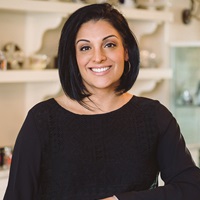
Guest
Nita Tandon
CEO and founder, Dalcini Stainless Inc.
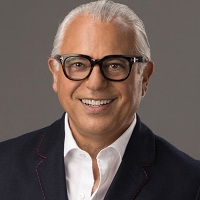
Host
Joseph Mimran
CEO of Joseph Mimran & Associates Inc., founder of Club Monaco & Joe Fresh, and former Dragon on CBC’s Dragons’ Den
Related resources

MyEDC gets you the answers you need
Join more than 30,000 Canadians who rely on MyEDC to grow their businesses with confidence.

Kickstart 2024 by securing financing for global growth
Discover the programs and services available to support your business growth and international expansion.
Export Guarantee Program
Let us work with your financial institution to help you get the financing you need.