
EP 07
Embracing diversity in international markets
Nov. 8, 2023

A broad connection: Creating media through international networks
Join our host, Joe Mimran, as he engages in a compelling conversation with Shahrzad Rafati from the BroadbandTV Corp (BBTV). Discover how she successfully built her business from scratch and cultivated a culture of diversity and inclusion within the company, all while achieving remarkable profitability. With a global reach, BBTV empowers content creators across 25+ countries, connecting with an average monthly audience of more than 600 million individuals.
Where to listen
Follow us on your favourite streaming platforms to never miss an episode of the Export Impact Podcast. Tune into our podcast for new episodes every second Wednesday at 6 a.m. ET.


Joe Mimran (00:02): Hi, I'm Joe Mimran and welcome back to the Export Impact Podcast. When you think of exporting, your first thought may not go directly to online content creation. But everything that exists globally under the umbrella of online media and therefore, content creation, is incredibly vital to the global success of many Canadian content creators and entrepreneurs. And that’s exactly where my next guest shines.
Eighteen years ago, Shahrzad Rafati created BroadbandTV, well-known as BBTV, to help content creators get their message out. Today, BBTV reaches 600 million people across 150 countries in 10 languages. Amazing. Shahrzad, herself, is an award-winning entrepreneur with an international profile and global reputation. So, how has Shahrzad been able to carve out this niche, supporting content creators everywhere while managing the risk of BBTV success in more than 100 countries? Well, we're about to find out.
I’d like to begin today’s episode by acknowledging that we’re recording from my office in Toronto, which is on the traditional unceded territory of many nations, including the Mississaugas of the Credit, the Anishnabeg, the Chippewa, the Haudenosaunee, and the Wendat peoples, and is now home to many diverse First Nations, Inuit and Metis people. We value taking this moment to deepen the appreciation of our Indigenous communities wherever we are, and to remind ourselves of our shared debt to Canada's First Peoples.
Shahrzad, thank you so much for joining us today. Before we get into the business of BBTV, please tell us a little bit about your personal background story. I found it fascinating when I was reading a bit about you and your family and where you came from. I'd love to hear it in your own words.
Shahrzad Rafati (02:00): First of all, Joe, thank you so much for having me on your podcast and I’m very much looking forward to our conversation. When it comes to my background, I grew up in Tehran and Iran. It was during the war and it was at a time when content was very much rationed and inequality was certainly an everyday reality, which hasn't changed much. I only had access to a handful of TV channels. I could see, even at that age, the power of content, even at a small scale. I was very young, but I’d already seen enough of the world to know that I needed a different future and I needed a life where I could make a difference. And really seeing also, as I’m sure you’ve seen the protests that are going on right now in Iran, really brings me back to how I felt during obviously the time.
This is such an important moment and hopefully, a turning point for the women of Iran. Of course, I know this is a great podcast. We talk about business, but I think, I believe in business for good. I encourage all your listeners also to really get involved and share the news and updates that are coming out of Iran because we all can make a difference.
But going back to my story, experiencing, Joe, that inequality firsthand created this desire and passion in me to be a positive agent for change, which very much so brings me back to my favourite quote from Gandhi, which is: “To be the change that you actually wish to see in the world.” That's why I moved to Canada to really have access to more of an inclusive and equal opportunity. I moved here when I was 17 by myself, just one suitcase, really no computer skills, very little English. And really, my passion for math and technology is what drove me to pursue computer science in university. Again, it was around this time that content played a big role in my life in helping me learn the language, expose me to new cultures. Of course, there was so much more of it. It was around this time that I built the business model for BBTV.
Joe Mimran (03:54): Wow. And you were 17 years old when you came here and you came on your own at 17?
Shahrzad Rafati (04:01): That’s right.
Joe Mimran (04:03): Wow, that’s truly incredible to hear. So, I want to start to get into the BBTV side of your life now. We usually talk to people that export physical products, not digital products, the way you do. I'm curious to understand the service. You work with more than 5,000 content creators globally, which is super impressive. What solutions do you offer them? What’s the financial model? What’s that look like? Can you give me an example of how you interface with them and how you service them? I think that would be interesting for many of the listeners today.
Shahrzad Rafati (04:40): Of course, the business model for BBTV, what we do, we’re a media technology company. We help content orders and content creators become more successful. We make content more valuable. We’re the largest global video network in the world, working with professional content creators from independent content creators, like Azlan Media to large media companies, like the NBA, Sony Pictures, Paramount, and others. Because if you think about it, at the end day, Joe, digital levels the playing field.
So, it was just really about how in this world, where you have unlimited supply of content, you have 50 million content creators, you have more than four billion users across social media who are consuming content, how do you get the right content in front of the right audience, and how do you make content more valuable? And that’s exactly what we solve for you. We built a very strong platform suite of solutions where we work with content creators at that one-stop-shop that helps them expand their views, expand their reach, have a much more engaged audience, and then monetize that audience more effectively on an advertising basis.
Joe Mimran (05:44): Could you give me an example of a content creator and what they do? They post something on YouTube, let’s say, they’re trying to sell a product or they’re trying to sell themselves, whether it be some new weight loss thing or something. Give me an example.
Shahrzad Rafati (06:01): For sure. When it comes to a content creator, you have to really understand the content creator’s lifecycle. A content creator’s lifecycle, you can think of it as really, there are four pillars to it: One is the creation of content, then there's the distribution of that content, which is deploying it across different platforms. And then it's about engagement: How do you build an audience? How do you grow that audience? And the fourth pillar is how do you get to monetize that?
What we want to do is, at the end of the day—content creators, they want to focus on their core competency, which is creating content and what we do is we take care of the rest. We help distribute that content, we help increase the level of viewership engagement levels for that content. So, they get higher watch time, they get a larger subscriber base, they get a larger viewership, and then we place ads against that content to make the content more valuable and to bring them a new revenue stream.
The solution is very turnkey, both in terms of the tick that we build and also how we monetize content. When you’re a content creator, you sign up with BBTV, you automatically sign a digital contract, and the minute you actually have that contract signed, you have access to our platform. Through that platform, you get to actually optimize your library of content with a press of a button, you can optimize your videos to make sure the videos have the right title, they have the right metadata, they have the right thumbnails, and then, you drive that overall viewership and engagement for that piece of content dynamically. From there, given the fact that we’ve actually acquired rights to the content, we’re able to place ads against that content.
So, we work with advertisers and agencies from Nike to Proctor & Gamble to General Motors to help them reach the actual younger audiences because at the end of the day, every brand also has a generational issue. They want to make sure that they can connect with this Gen Z, Gen Alpha, Millennials, young Millennials to be able to actually reach that audience. Because really at the end of the day, 50% of the actual people that we reach aren’t reachable through TV and traditional mediums. So, it's about how do you actually expand that, get in front of that right audience and at the same time, we drive value to the creators by having these targeted ads that speak to who they are.
If you're a basketball content creator, we’re placing ads from, for example, a fitness company or brands that are wanting to reach exactly audiences consuming that type of content. It's contextually relevant.
So, it's a win-win for the content creator where their content becomes more valuable and for the brand to be able to actually get their visibility for their actual products against an audience that’s actually the right audience—not just based on who the demographic of the audience, but their passions, their interests in terms of the content that they’re consuming and the creators are there connecting with.
That’s really that win-win opportunity with respect to the values that we create to the content creator, which is very much so automated turnkey as far as increasing their viewership, reach and monetization, and at the same time, creating a strong value proposition and ability for brands and advertisers to really reach their desired audiences against the most premium brand safe and targeted content.
Joe Mimran (09:16): That sounds amazing and it sounds complex. How do you deal with YouTube where if you become a subscriber of YouTube, you block the ads. How do you manage that piece of it?
Shahrzad Rafati (09:29): We have a great partnership with Google and YouTube. Look, YouTube is still home to some of the largest content creators who see the platform as not just a place where they can build audiences, but they can monetize their audiences. And we’re a mega-publisher on the platform where we represent about 30 to 40% of their reach. So, one in every four people who’s actually watching YouTube content is watching our content. What we do, as far as with the content creators, we're amplifying audiences where they’re coming to their channels.
It’s like, how do you get a billion and a half people who are watching YouTube to get to actually watch these channels? How do you make sure that once they’re on these channels, they’re spending more time on these channels by increasing the overall watch time? How do you actually facilitate to make sure that the ads that are placed against the content are the highest quality and with high premium rates as far as the value of those ads? That's really it. We’re helping creators to become more and more professional content creators, create better content, create much more engaged audiences, and then monetize that.
Joe Mimran (10:34): That's amazing. How do influencers play in all of this? And with the rise of TikTok, how do you interface with influencers and that platform specifically?
Shahrzad Rafati (10:46): It’s a really good question. I mean, look, as we talked about, we have more than 50 million content creators globally. When you think about the creator economy, it's $104-billion market and it's a market that’s growing very rapidly across all mediums. Whether iyou're looking at mobile, with respect to formats that are emerging on mobile, you think about the TikTok generation, which is micro-content, you're looking at folks who are creating less than a minute-long content. As a matter of fact, we’ve worked with a lot of short content creators. It’s a new format. It’s a new medium, in terms of connecting with new audiences, which didn’t exist if you go back three years, right? So, formats are evolving, formats are changing and as a result of it, the reader pie is growing. It’s no longer a time where it would take you two weeks to create content, edit it, and then post it and have it deployed.
Today, you can actually create a piece of content on your phone less than a minute long, upload it, build an audience, engage with that audience, and then monetize it. So, when you're looking at that four billion-plus users on TikTok, who are on Instagram, who are on YouTube, they’re all going to become more and more like professional content creators. And I’m sure if you ask someone within your family, immediate family or extended family, especially with Gen Alpha, Gen Z, and you ask them who do you want to be? They're going to tell you, I want to become a YouTuber. I want to be become an Instagram influencer. Because you know, you can build a brand, you can connect with an audience and then you can monetize that audience so effectively now.
Joe Mimran (12:15): It’s growing and it amazes me because these short formats now it's a little bit, like Twitter was when they had limited characters and it’s just so fast. That’s the other piece of it that boggles the mind is how much content is getting created and really how valuable it can be when you finally do hit and get the followers you're looking for. As someone who’s been always in the consumer goods side and then the fashion side, getting to these end users in an efficient way has always been very much what we’ve wanted to do, in order to sell products. So, this is a brave new world.
Shahrzad Rafati (12:56): Things are changing so rapidly. You think about companies, like Midjourney ChatGPT, I mean regardless of which protocol you use, I’m very much so excited about what’s happening, not just on the tech side, which many talk about ChatGPT, but it’s the audio, the video, imagery, you think about Midjourney and how quickly we can actually create imagery. You think about how on the video side of the house, there are a number of companies that are doing very innovative work.
At BBTV, all that we’ve done over the last 10-plus years is leverage artificial intelligence (AI), computer vision, signal processing to build technology and solutions to automate things for the content creators. It couldn’t have gotten even more exciting. We think about we’re still in the thick of this fourth industrial revolution where you have new technologies and approaches that are merging just in the physical and the digital and even in the biological world. I think really with respect to this next chapter on how Generative AI is going to redefine the entertainment sector, the media tech sector is very exciting. And any company that isn’t really looking at disrupting themselves and really embracing Generative AI, it's just not going to be in a good position because it’s no longer a question of if—this already has happened.
Joe Mimran (14:13): That’s interesting. My wife had a gallery showing yesterday. It was all about AI photography and distortion and it’s super interesting. A lot of ethical issues around it, a lot of legal issues, trademark issues. There’s a whole bunch of things that also come out of this and disruption in terms of people losing their jobs. Copywriters are going to have a hard time going forward and even models may have a hard time. And so, it leads me to my question of when you first started. You started in Canada and this podcast is about exporting and giving people advice on how they should go about tackling export markets. How did you think about that? What did you do to really get out into the marketplace and start to tackle these foreign markets? What were some of the hurdles that you encountered with dealing in different countries, different languages? I think that would be really great to hear from you on that.
Shahrzad Rafati (15:08): You know, both of us are first-generation immigrants and I think part of being an immigrant, it just exposes you to new cultures, new territories. I grew up travelling to different parts of the world, so building a global business was something that I wasn’t afraid of. I always knew that I wanted to build a global business and it was just about more so how do you start, where do you start?
I think being in Canada, so close to the U.S., the U.S. is our biggest market and it was just more so about going after large pools of opportunity and solving a big problem for a large market and starting with one of the biggest customers. You know, we started with MB was one of our biggest customers. Venevision was one of our biggest customers and we challenge ourselves, in terms of building products and solutions that solve problems for some of the largest customers in the economy, media and entertainment world. And then from there, you have the IP (intellectual property) owners and content creators joined us.
We tried to actually really challenge ourselves, in terms of building solutions that are truly solving problems for some of the largest players because they’d challenge you in customizing solutions, making sure that you have the right set of policies and procedures and processes in place. And then we were able to scale that out of the U.S., again going after the biggest customers in other markets with Latin America, Brazil, Mexico, and then we launched in Europe. Again, I think it would be different, like I’d say being in media tech and software is definitely much easier, but at the same time, being in the business of content, you also have to understand that not each market is the same.
So, you want to benefit from that global infrastructure to be able to build scalable solutions, but you really need to also understand the local culture. You really need to understand the local challenges that a market is facing to make sure that your solutions are properly localized. We didn’t try to rush into localizing our solutions. We launched our solutions in the Spanish market. We were in the Spanish markets for a number of years before we actually expanded into Brazil. And then from there, we went to Portugal because there was actually specific similarity in cultures and language in terms of localizing our software. And then we expanded very strategically and we looked at both qualitative and quantitative KPIs (key performance indicators) in understanding which market we should be tackling next. So, we’re not too early, we’re not too late and we can leverage our global infrastructure technology, what we build to make our solutions a lot more effective and efficient.
As a matter of fact, even though, we did last year more than $400 million of top line in revenue, a lot of that makes you think about it as it relates to localization with respect to each of the international markets. We made sure that each of these markets are tackled specifically with the right set of ideas, the right set of value ads. And we’ve still got a long way to go in many more markets to get into because we’re currently still in 28 countries at the time.
Joe Mimran (18:06): And how did you tackle the foreign market? Did you go yourself into the market? Did you have assistance when you went into the market? Did you hire local people? How did you tackle each of these markets?
Shahrzad Rafati (18:19): We just went direct. I think it all comes down to building a good team. We hired really solid country managers who understood the market, who understood our space and are very much so clear on onboarding documentation processes to be able to empower them. In certain markets, we try to form a partnership. I would say Japan would be one of those where we thought maybe we should form a partnership, but then we realized, it’s better if we go direct. It may take a little bit longer, but it also allows you to better understand the market and to update your solutions and services. We’ve gone direct across all the markets that we operated in so far. We’re open-minded because certain markets are more challenging and we’re always open to partnerships. It's also a bit different, for example, when it comes to monetization, in terms of how we actually sell inventory against our content. We’re very much so, for example, in Germany, we have a partner there for monetization. As long as the partner can significantly do a better job, we certainly look at those partnerships.
Joe Mimran (19:19): Yes, and I guess when you’re hiring solid country managers, I think that’s more difficult to do than a lot of people think, to find the right people and then to train them correctly because you’re going to go through churn, I would think, right? You’re not going to get it right every time you go into a market. What’s the biggest risk that you have when you go into one of these new markets?
Shahrzad Rafati (19:41): I would actually say it all comes down to finding the most adjacent markets and getting help from the leader of that market. For example, when we launched in Mexico, from there, we went to Argentina, Colombia, and Paraguay. And then, when we wanted to launch in Brazil, we actually got help from the leader of the Portuguese market and in Brazil, and then we expanded further. The same thing in Europe. I think it's very important to really look at these adjacent territories that have similarities, in terms of audiences, languages, perhaps even in culture, to really benefit from the infrastructure and the know-how and the expertise that you built to expand into adjacent markets. For us, that has been probably the most important thing.
The second piece of it has been having a centralized model and we debated a centralized versus a decentralized model. We tried both and a centralized model is what basically got us to be very successful and to really gain a massive scale. Like today, we reached 38 billion monthly views and it’s simply because of the fact that we actually have created a centralized ecosystem where we benefit from the expertise of folks in different markets who can learn from each other.
Generally speaking, Joe, we have our mantra: Quick failures. I can't name a big failure that we’ve had at BBTV because it's all about quick failures: Fail quick, fail fast, fail forward. And that’s our mantra. It doesn't matter if it’s a new territory that we’re launching in, if it's a new vertical that we’re launching, if it’s a new product, we always want to make sure that we don’t fall in love with the ideas of how we do things. I highly encourage all of our team members to fail quick, fail fast, then instead of having to deal with large failures.
Joe Mimran (21:22): From an international perspective, what’s the most complex aspect, the riskiest and most complex that you deal with from an international point of view?
Shahrzad Rafati (21:33): I would say you just want to make sure that you’re very close to regulations and changes in policies. It really doesn't impact us because at the end of the day, we’re not the platform itself. We’re a mega-publisher that sits on the platform. But even with that, we’re always exceptionally proactively involved in making sure that the policies aren’t impacting our content creators negatively. And the other piece of it is diversification. I think one of the things that we practice at BBTV that has been a recipe for success is our diversity. Diversity in demographics, diversity in content creators, diversity in verticals, diversity in geographies. So, where you have challenges in a certain territory, you can actually scale up and expand in others. If there’s an election, if there are challenges with it, like you talked about the U.K. (United Kingdom) for example, we talked about Europe, U.K., Brexit, we had a moment in time where ad dollars/ad spending got reduced for certain geographical events. And because you’re very diversified, it doesn't impact as a company.
Joe Mimran (22:36): Yes, exactly. Diversification is really a big help, but it also adds a lot of complexity, which you seem to be able to handle it. In terms of growing the business capital—and I know when I’d been growing my businesses in the past, I used to spend in the early days almost half my time just raising capital—how was that for your company? I know that you’re a public company and when you went public, as you grew, you’ve been in business for 18 years now, when did you go public and how has capital been an impediment to your growth or not?
Shahrzad Rafati (23:11): For me, I wanted to have optionality for the business, so we would strap the company to profitability, we went after the biggest clients and we scaled the business. It was at the time where the company was cash flow positive and that’s when we invested in our technology. We invested in monetization and our plus solutions to be able to actually increase margins for the business and to really build sustained plans for profitability for the company.
We went public in October 2020. It was probably the worst day of the year outside March, but there were no IPOs (initial public offerings) obviously in March of 2020. And the markets have been very tough and I think it’s been very important for as an entrepreneur to really separate how the market doesn’t define your value. I think a lot of entrepreneurs don’t see that. It’s very important for management to focus on the business, driving the business forward and really focus on scaling the business the right way while driving shareholder value.
As far as capital as a public company, we’ve actually done a number of rounds in terms of raising debt. At the end of the day with the current market caps, it doesn’t make sense to raise equity and we have access to obviously markets both in the U.S. and Canada on that end.
Joe Mimran (24:28): That’s great. I'm just going to switch gears here a little bit. So, 50% of your board at BBTV is BIPOC (Black, Indigenous, People of Colour), 50% of the board identifies as female and 40% of the management are women. What’s the story behind having such a diverse workforce? That it just happened this way or were you intentional with building a diverse team along the way?
Shahrzad Rafati (24:52): Well, absolutely, very much so, intentional, Joe. I built BBTV as a quadruple bottom-line business. And when I say quadruple bottom line, I really mean, we measure success not just based on financial KPIs, but we also look at people, social, and environmental KPIs. I think it’s very important, just like any other KPIs, for management entrepreneurs to set goals, measure them, and really report on them because you need to make sure that you have the right processes in place, you have the right pipeline, and also most importantly, the right incentives to be able to achieve these goals. I really believe that the same way that we look at our financial KPIs where we have short-term and long-term plans, we need to have short-term and long-term plans for the rest of the KPIs.
For example, when it comes to people, as you outlined, Joe, I’m very proud. We have a 0% pay gap at BBTV and it’s been like that for more than now, almost six years. Not just based on gender, but no matter how you actually slice it, I’m proud that 40% of our employees and managers, identify themselves as female, which is always, when you talk to many, they say it's hard in tech, it's hard in media. Well, it isn't because if you have the right processes, if you’re tracking things and if you’re incentivizing people the right way, then you can achieve those goals. And as you said, we’re also diverse more than 40% of the actual workforce and, as you said, 50% of the board identify themselves as members of BIPOC.
I'd like to also highlight that this is no longer something as a business, we really care about our ESG (environmental, social and governance) goals because we know our customers care about our ESG goals. And when it comes to building a quadruple bottom line and really looking at those KPIs, you need to apply the same level of accountability, same level of accountability for gender pay to your carbon footprint. We’re carbon neutral business, right? We look at our landfill diversions waste. It’s important for leaders to be held accountable and to be able to really have these processes in place. It’s really no longer a question of doing the right thing, but it’s actually good for business. It’s without question, good values generate great results.
Joe Mimran (27:02): I’ve been in the fashion industry for so long, it has always been at least 80 to 85% women in my offices. I don’t know what all the fuss is about.
Shahrzad Rafati (27:14): But you know what, it’s tough. You know what’s interesting, Joe, it’s about that balance, right? Like what we do is, for example, we have a gender interviewing process; overall, we interview at minimum two male and two female candidates. So, you’re creating this equal opportunity, right? And as you said, some industries are different. But I think at the end of the day, it's about having the right pipeline for talent.
Joe Mimran (27:41): I think what you said is so important, which is I think businesses have to have KPIs that go beyond financial and I think consumers expect that today. I think the consumer today, it's something that’s really being woven into society and how we think about how we want to interact with different products and different brands and it’s table stakes now. I think people have to get their arms around that as they do with Generative AI.
You’re such a high-profile CEO. You've gone so far as representing Canada on G20 Empower, a group that was started by Angela Merkel to drive women to leadership positions. And now that I've had a chance to speak with you, you certainly are a dynamic individual. Not only putting the work that BBTV is doing on the map for Canada, but quite the initiative in supporting women in leadership, as well. We’ve talked about how this has helped you grow your business, how you become an international player. And for those who are out there, Canadian entrepreneurs, what’s the one piece of advice you would give them on how to grow their international business footprint going forward?
Shahrzad Rafati (28:57): Well, thank you for that. And certainly, I’ve got tell you, women economic empowerment and social health is such a big passion of mine. We’ve done such great work with G20 Empower part of such a great team, and it’s been such an honour to work with men and women at the table who are really focusing on creating a level playing field for everybody and really lifting everyone up with the rest of the countries across G20; really setting the right, standardizing data for the first time across G20 countries, setting the right set of KPIs, working with the private sector, incentivizing the private sector to act and really have the right policies, providing them with the best practices that they can actually follow.
We’re very happy with the work that we’ve done over the last four years and continue to build on obviously that success.
On advice for entrepreneurs, as far as building a global business. I’d say look, especially with Canadian entrepreneurs, we need to think big. We need to go after large pools of opportunity. Don't be afraid and make sure you’re strategic in terms of how you actually select those markets that align with your industry, specifically products that you’re building, and make sure that you’re going after the biggest markets. Because at the end of the day, that’s what really what matters. And hire good people, hire people who have done it, who have the experience that can help you, and you’ve got to have the developing list to learn new things and understand that not every culture and every territory is the same, and that localization of your solutions is really key to success.
Joe Mimran (30:27): Wonderful, Shahrzad. Thanks so much for taking the time today. What you’ve been able to build in such a highly competitive and fast-changing industry is really quite remarkable and a true inspiration for female entrepreneurs and for all entrepreneurs. It's been a real pleasure speaking with you today.
Thanks for joining us today on the Export Impact Podcast. If you enjoyed today’s episode, we’d love for you to subscribe, rate, and leave us a review on your favourite streaming platform. See you back here in two weeks.
Host & guest
-

Guest
Shahrzad Rafati
Chairperson & CEO, BBTV
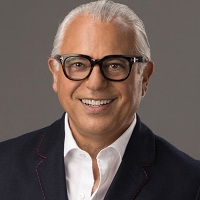
Host
Joseph Mimran
CEO of Joseph Mimran & Associates Inc., founder of Club Monaco & Joe Fresh, and former Dragon on CBC’s Dragons’ Den
Related resources

MyEDC gets you the answers you need
Join more than 30,000 Canadians who rely on MyEDC to grow their businesses with confidence.

Stimulating growth with supplier diversity
Learn how supplier diversity programs can help your business grow.

EDC Solutions
Our unique suite of solutions can help you offset the risks of doing business abroad, finance your deal, and access the working capital you need.