
EP 04
Innovating for a sustainable future: Insights from Jocelyn Doucet, CEO of Pyrowave
Sept. 27, 2023

Innovating for a sustainable future:
Insights from Jocelyn Doucet, CEO of Pyrowave
In this episode of the Export Impact Podcast, Joe Mimran sits down with Jocelyn Doucet, CEO and founder of Pyrowave, a pioneer in the electrification of low-carbon plastics for non-renewable energy. Pyrowave’s innovative technology has led them to help industries around the world adopt clean technology to convert non-renewable, carbon-dense energy into a renewable, cleaner energy for a sustainable future.
Where to listen
Follow us on your favourite streaming platforms to never miss an episode of the Export Impact Podcast. Tune in to our podcast for new episodes every second Wednesday at 6 a.m. EDT.


Joe Mimran 0:01
Hello and welcome to today’s show. My guest today is Jocelyn Doucet, CEO and co-founder of Montreal-based Pyrowave, a pioneer in the electrification of chemical processes based on low-carbon footprint microwaves. Jocelyn is an entrepreneur, innovator, and chemical engineer who’s passionate about transitioning from non-renewable energy resources.
I’d like to begin today’s episode by acknowledging that we’re recording from my office in Toronto, which is on the traditional unceded territory of many nations, including the Mississaugas of the Credit, the Anishnabeg, the Chippewa, the Haudenosaunee and the Wendat Peoples. And is now home to many diverse First Nations, Inuit and Métis people. We value taking this moment to deepen the appreciation of our Indigenous communities wherever we are, and to remind ourselves of our shared debt to Canada’s First Peoples.
Welcome to the show Jocelyn. Pyrowave is a leader in plastics circular economy and chemical recycling, and uses a unique technology to recycle the plastic waste from microwaves. And I want to confirm, are we talking about microwaves as in the kitchen appliance?
Jocelyn Doucet 1:19
Good question. We’re using a variety of different microwaves. We started initially with our kitchen microwaves because that’s all we had available. But now, we work with much bigger microwaves: Industrial microwaves that are a thousand times bigger than the microwaves we have in our kitchen. Somehow related, but it’s a bit different in scale.
Joe Mimran 1:38
And what makes recycling microwaves different from recycling other kinds of plastics? Maybe you can get into how it works exactly.
Jocelyn Doucet 1:47
Sure. We use microwaves to break down plastics. We are very familiar with that material. I think plastic is everywhere in our lives, but sometimes, it’s very difficult to understand how it’s made. So, think of a long chain of molecules that are very, very long. And basically, you have smaller bricks that are all attached together to form that long chain that’s called monomers. And the monomers are attached together to form polymers. Essentially, what we do for recycling these polymers is we break them down back to their initial monomer shape. It makes it much easier for recycling because we can reuse it in a variety of different virgin-like applications.
And what we do different with microwaves is that we’re much more gentle when we break those bricks, so we don’t destroy any of them during the process. So, we’re more selective and we have better yields and better quality at the end of the process. We’re able to, somehow, cut the chains more efficiently than the traditional technologies that are out there.
Joe Mimran 2:44
And was this something unique that you discovered, or had they already been using microwaves in this manner?
Jocelyn Doucet 2:53
A lot of people worked with microwaves for the past 50 years. And interestingly, when you read papers back then, like scientific papers, you realize that people did a whole bunch of very crazy experiments and they discovered that using microwaves for chemistry was really bringing something more: Better quality, more selective reactions. That’s something very important in chemistry, we want to have only the desired chemical. The more selective your chemistry is, the better it is because you don’t need to purify it so much to get to the product. A lot of people worked with microwaves in the lab, but they were facing a scaling issue. It was difficult to use that industrially. And so, it was put back on the shelves for some years.
Eventually, we showed up and we decided to take this challenge and bring it industrially because it unlocks a huge potential of advantages. And we thought it’d be easy. But now, we have it. It works. We’re able to use microwaves industrially to make that chemical reaction. That can apply for plastics, but we can now apply it to a variety of different other chemical reactions.
Joe Mimran 3:57
Did it take 15 years to actually perfect the method? Is that how long it took before it became commercially viable?
Jocelyn Doucet 4:05
We started working on this back in 2009. And now, we’re in 2023. From an entrepreneur perspective, I think you need to have this naive view that things will take less time than you think. But eventually, you get your arm in the shredder, and you just get going, and then find new investors and people who help you along the way because I think we’re tackling an important problem. And at the end of the day, that’s what makes it possible.
Joe Mimran 4:30
Before we get too far into the conversation, it would be interesting for you to, perhaps, explain the term “circular economy” because I’m sure there are some listeners who may not have heard the term or know about the term, but you can give us your definition of it.
Jocelyn Doucet 4:45
Sure. There are a lot of people who have a different definition of circular economy. I think my definition is how do you make natural resources more circular? How can you reuse the material you’ve used and reintroduce it into your normal life? I think that’s very nature-inspired, in the sense that, when you look at nature, the waste of someone becomes the fruit of someone else. That’s the way nature found to be what I call “resource efficient.” You have that limited amount of resource on the planet, but you have this unlimited amount of energy flowing from the sun that helps you restructure that material infinitely. This is what, I think, as a civilization, we haven’t been able to figure out yet. We’re consuming a lot of natural resources—we consume them and then we discard them. And yet, this second part hasn’t been fully addressed. And to me, one of circular economy’s challenges is to be able to close that loop and reuse what is someone’s waste to feed another process to make someone else’s product.
Joe Mimran 5:43
I know it’s a bit morbid, but we all go back into the earth. We all get recycled ourselves. And we’ve got to figure out a way to do it with all of the man-made products. Excellent way of describing that. All aspects of our lives have plastics in it in one form or another. We certainly rely on plastic to a great extent, and it’s become this huge global challenge. You’ve become a leader in this type of renewable energy resource, talk a little bit about how you’ve tackled that challenge, specifically.
Jocelyn Doucet 6:17
Plastic is certainly a very useful product, that’s why it has become so popular otherwise, it wouldn’t have been that popular. It certainly addresses the need. I think, now what we have to figure out is how do we use that material after it’s been used? The thing is, we use plastic in a lot of short-period times, so it’s a lot of single-use packaging and products. And so, definitely, the lifetime of the material surpasses the lifetime of the application. This is where our relationship with how we use that material in our daily lives, we have to think about it.
I think, there’s a need for technology to be able to return it back to something useful enough in a quality enough that you can reintroduce it into virgin applications. The problem is industrial. I think the solution has to be industrial. That’s where we come up with a solution where there are a lot of technologies that can break down polymers and return them back into virgin-like product—but not as good as our technology, not as selective and as efficient as we do. That’s because we approach it from a very different angle—from the electrification angle.
For the last century—I’m a chemical engineer—the way chemical engineering has evolved, it’s always been the same global recipe. We use steam engine and we power up with fossil fuel, and we steam up our process. We make those machines turn and make chemicals. I think we need to revisit that because, if we want to really rely on renewable energy, we need to do something different than burning fuel. For that, you need a set of new technologies: Our microwave technology that uses renewable energy. And once you’ve unlocked that new potential, it’s like using a high-speed train that’s fully electrical compared to steam train. This is the only way you can go faster because a steam train can only go to a certain speed because of the technical limitation of the mechanics.
But to be able to get to a much faster speed, you need a new set of electrical technologies, and this is what we’ve seen with train transportation. We need to do the same revolution in the chemical space to be able to look at how we can electrify our materials. It’s a very popular term these days—electrify transportation—but I think we also have to electrify our materials. Materials are very carbon intensive. The three most carbon-intensive materials are steel, cement and plastic. If you look at the list of greenhouse gas emissions, this is what you see on the top. We need to bring a set of new technologies to decarbonize those materials because we need them for civilization. This is what we’re bringing to the market.
Joe Mimran 9:00
That’s amazing and it’s no wonder you were the winner of the Outreach Outside Quebec Award (highest environmental recognition in the province) at the EnviroLys 2022 Gala, as a result of your really interesting collaboration with the French tire giant, Michelin. Tell us about that cool project.
Jocelyn Doucet 9:19
Michelin is a fantastic partner. This is what every startup owner dreams of, where you have a company in the market that suffers enough from a problem and they need to really take a bigger risk to solve their problem. Michelin has a very ambitious goal to turn 100% sustainable by 2040. For that, they need to source renewable chemicals and one of the chemicals they use in their process is styrene, which is something we make with our process.
We turn polystyrene waste and No. 6 Plus back into styrene monomer, which is the smaller bricks I talked about earlier. And they use this to make elastomers for the rubber they put in their tires. They came to us three years ago, they said, “Oh, we have this problem. We’d like to turn more sustainable and we want to use your technology to turn waste into feedstock. Your styrene is going to be usable for our renewable tire.”
Fast-forward three, four years later, this is where we are. We have a full package engineered with Michelin. They will start construction of the first industrial site with our technology at the core of it. With the support of Michelin, we’ve been able to demonstrate the technology enough to the point where we’ve also been able to sign deals in other countries where they also face waste crisis, and they have a lot of incentives for introducing more recycled material into their product. It was the start of a fantastic growth phase for us, having a first adopter is always the most difficult. Nobody wants to be first, but everybody wants to be the first to be second. That’s what I hear a lot. So, once you found that first mover, then things should be a bit easier down the road.
Joe Mimran 11:03
Especially a mover like Michelin, quite a feather in your cap in terms of being able to make that kind of sale. And I’m sure this is quite a long-term relationship now that’s been developed, which can lead to so much new business. That kind of takes me to the next part of our interview, which is really about exporting and how you’ve managed to do that. From what I understand, you’re in a lot of different countries now. And, again, one of the hardest things for small companies, Canadian companies, particularly, is their ability to really get out there and become a global company, which you seem to be doing. Just talk about the markets you’ve exported to, and making those first steps, how you made those first steps to decide that you’re going to go outside of Canada.
Jocelyn Doucet 11:47
Well, circular economy is driven by, essentially, regulation. For us, the main challenge is: Where do you have a market where you have regulations that are strong enough that companies will take that risk to invest in earlier stage companies, and earlier-stage technologies, and help them accomplish their goals? Europe is definitely a key market for us because they do have a couple of key regulations, in particular, the Zero Waste Initiative where they force companies to have a minimum amount of recycled material in their product, otherwise, they’re going to pay a tax, or they will lose their right to play in the market. This is a big driver for adoption of circular economy technologies, like our technology.
Also, you have a couple of countries in Asia where, not only do they have this regulation forcing companies to put recycled material in their product, but you also have countries where they have a lack of natural resources. And so, they want to use waste as natural resources to solve that import problem where they have to rely on bigger countries and third-party countries to be independent with their natural resources. The U.S., for sure, is an interesting market, obviously, because of the size of the market. However, we see things have been moving very fast lately. You see a lot of movement in the cleantech space, a lot of subsidies and money is available for companies to transform their processes and face the upcoming demand for recycled content.
Canada, of course, is still waiting. We know that Canada is a leader in everything related to plastic. They’ve been the signatory or the leader for this plastic charter back in time. We see Canada always as a second-mover when things are progressing on that front. But we’d like to do Canadian projects at some point. But we do have waste—a lot of waste—and I think there’s a fantastic ecosystem of technologies here in Canada that we should definitely tap in on.
Joe Mimran 13:43
And exporting is such a challenge for so many companies. There’s new laws and there’s all kinds of things that come about when you go into a new country. But just talk us through some of the biggest hurdles and challenges that you’ve had as you’ve been exporting.
Jocelyn Doucet 14:00
The culture is always a big challenge. But we are lucky enough that we speak French here, so we’re able to communicate very easily with French counterparts than with other countries. However, the culture is different for sure, but I think if the language barrier is at least eliminated, it helps a lot. We did face that in some Asian countries for sure. Not only on the language barrier side, but also on the way they do business. The way they say things and the way they don’t say things. It took us some time to understand that, essentially, our client was telling us something that we didn’t quite understand.
We learned that where we now partner with local agents, it helps us in how we develop the business and how we establish the business strategy. I think the culture is certainly one thing that was very difficult. And we engaged with a lot of companies, and they didn’t go through, maybe because we weren’t able to understand each other. It’s quite sad: You have a fantastic company in front of you and it’s just impossible to understand. So, we hired people that speak the local language, we learned how to make things happen. The clients come back to us now, but for sure, I think the culture is certainly something that we underestimated. We think we speak English, we’re North American, we’re not used to that. But when you speak with different European countries, and they all do business differently, it may create some tensions sometimes.
Joe Mimran 15:20
But also, isn’t the sale process just a very difficult process to begin with? First of all, you’re selling a very technical service and then, you’ve got to spend time to travel to these countries; you’ve got to go to shows. Tell me, specifically, how did you go about it? Just the guts of how you went at it.
Jocelyn Doucet 15:41
I think the fundraise part of the company was also leading to the sales process. What I mean by that, when we raise funds, we talk to their corporate ventures, so companies, strategic investors, like chemical companies, in our particular case, they all have their own corporate venture arm. These guys scout technologies. They scount investments, but primarily, they scout technologies that could fit into their core strategy of how to become more sustainable. A lot of the clients we have now, we got introduced by CVCs, corporate ventures, or even venture capital firms. One French fund that invested in Pyrowave back in 2018, they had Michelin as part of their limited partners. And so, by having them as our investor, they also talk about Pyrowave and what we do, and we can recycle polystyrene, and someone in the room for Michelin says, “Hey, listen, we were looking for a styrene solution. How we can have recycled styrene for our tires,” and they got introduced.
I think in the natural cycle of building a company, if you have the right investors at the right time, and you talk to the right people, eventually, they get to know you more. And that kind of gets me to the point where you can’t get where you are 10 years down the road without watching the 10 years because one thing that we have that we didn’t have back then is that we’re still there. It’s a credential that you haven’t gone down the drain. And so, when you talk to clients, they’re like, “OK, you’ve been through this, you must have something interesting, otherwise, you’d be dead by now.”
Joe Mimran 17:21
It's an amazing story that’s really a tribute to yourself in terms of being an entrepreneur and having hung in for all those years, and now, exporting the way you are and doing business the way you are. I find it also super interesting in the way that one thing leads to the other. And if you don’t put one step in front of the other, you sometimes can’t get there. But also, the fact that you have to raise money all the way along, which is a very painful process for a lot of entrepreneurs. And many entrepreneurs just don’t have the courage, or the guts, or the capability to do that over a long period of time. You must have had some partners or programs that you were part of, people who helped along the way. You mentioned some venture capitalists. Are there any other partners who helped you as you’ve grown?
Jocelyn Doucet 18:15
Of course, there are a lot of people you meet during the journey. But, for sure, there are a lot of government programs that really helped us early in the process. For example, Sustainable Technology Development Canada (SDTC). They’re a Canadian Initiative where they invest in early-stage companies to demonstrate their technologies, and help them scale and get commercial-viable product. SDTC was one of the organizations that really helped us at a critical time of our company. But eventually, things, like I said, lead to another.
SDTC, they have a wide network of investors as well, so they’re able to introduce you to other investors, and then, so on and so forth. This is how we kind of got started. My partners, I have my fantastic team, of course, they’re delivering fantastic engineering products and testing research projects, they’re closing deals, now they’re able to make sales. At the end of the day, I think we’re all driven by a mission and I think the vision and the mission is very critical.
Why are we doing this? We’re not just doing XYZ product. We’re doing something because we believe that’s the way it should be and we believe that the future of our industry should be electrical. We’re able to do it, and we’re able to make lower carbon footprint materials by bringing in innovative technologies. People in the company, they all believe in this, otherwise, they wouldn’t show up every day—especially not in the early days when everything was so difficult and we didn’t have fancy offices. They’re here because they still believe in that vision.
Joe Mimran 19:39
It’s a wonderful vision and you speak of it in an evangelistic way, which is also an important part of leading a team and being an entrepreneur because you specialize in a technology that regenerates all these post-consumer and post-industrial plastics into these new materials. It'’ not really a new material—
it’s reusing the material. Perhaps, you can also share with us some examples of the customer service that you provide and how you meet some of the key demands from your customers.
Jocelyn Doucet 20:13
Well, sure. We’re just starting now to get our product in the market, so it’s actually the product that was the core of our interest for the past years. Now, we’re really starting to develop this after-market business. But, right now, essentially, clients come to us when they have this need for what I call the “recycled styrene.” It’s one chemical; it’s a commodity chemical. We’re able, with our process, to make that identical chemical identical to virgin with waste. And so, you have lower carbon footprint.
We have a carbon footprint impact, so people come to us and say, “Well, we’d like to offset our virgin styrene with renewable styrene, low-carbon footprint, etc.” And when they come to us, they send us their material, we test it. “OK, technically it works. Here’s the deal.” We sell them the equipment. We sell them the licence. They operate it and eventually, of course, there’s some after-market-like data. We can help them with the parts and training, and everything like that. But in the end, what they have as a service is that they’ve been able to reduce their carbon footprint, and they’ve been able to meet their recycled content targets. This is what drives the economics because, otherwise, they would have to pay a tax for carbon, or they would have to pay a tax if they haven’t met the recycled content. And most of them, they would lose this right to play. If you don’t comply with the regulation, but your competitors do, then you lose the right to play in this market. That’s kind of the value proposition in a nutshell and that’s why people come to us. That’s what we offer.
Joe Mimran 21:42
Now, supposedly, there’s something, like 300 million tonnes of plastic waste, that are produced annually. Have you made a dent in that?
Jocelyn Doucet 21:52
I’ll tell you a story that’s really funny. There is 300 million tonnes produced every year, and that’s all going in our waterways and soil, everything. And yet, the biggest challenge we have is to find feedstock for our recycling process. Isn’t that funny? We’re trying to solve a wage problem, but apparently, there’s no problem because there’s no feedstock. That’s the crazy challenge we have. And why is that a challenge? It’s a challenge because we don’t have the infrastructure to reconvey that material that was, for decades, just trash and thrown away. And nobody tracks this anymore. They just disappeared.
So now, we have to build this re-collection infrastructure that will reconvey that into a new preparation process, and then, take that as a raw material for our processes. And here’s the same thing: We have all those locations where we produce trash, we just haven’t figured out yet how are we going to pipeline all that material into single locations where we can reuse it? That’s a challenge we have. I don’t have the answer to this. And you know what? It’s going to be even worse because we predict that by 2030, there should be three times more plastic produced. We have to crack this problem. We have to figure out how to convey that material back into our recycling process.
Joe Mimran 23:09
It sounds like you’ve got another business idea in just trying to figure out this new infrastructure. Is that something that you might be working on?
Jocelyn Doucet 23:18
We have to be working by force somehow because if we want to be able to sell--and this is the circular economy conundrum--you want to sell something that turns trash into product. You may have this brick that turns the trash into product. But now, you have to also find a way to get the trash to the process. Somehow, we have to develop that skillset, as well. We cracked that show with Michelin. Our project we do in Europe, we had to figure out how the logistics of the material will have to be, in order to match our process demand. And now, we’re making it available, as well.
When there’s a hole somewhere in the market, there’s always an opportunity for business. But you’re right. This is the big thing. And every time you talk to people in the space, the first question they ask is, “How do you deal with the feedstock?” I don’t have the whole answer to this, but I think government certainly needs to step in. If we have invested in water reclamation process, I think we need to also have a plan or, at least, a strategy on how we’re going to deal with that growing amount of waste. If it brings advantages to the front end when we use it, it has to be somehow compensated. Some cash has to come somewhere to be able to also deal with the material after we use it.
Joe Mimran 24:39
Do you have any direct competitors out there at this point?
Jocelyn Doucet 24:43
Right now in the chemical recycling space, you have like two big families, two big tracks that you can look at: You have what we call the “coal processing” track. A lot of companies, essentially, they will just liquefy plastics, and then, blend it into the virgin chemical process and co-process it with a virgin material. The disadvantage of that is that you always need to have virgin material to process it. You’re not independent of virgin, so for each kilogram of recycled material, you may need 10 or 100 kilograms of virgin. So basically, you don’t solve the problem.
You also have the “standalone” track, like our technologies, where we’re able to segregate the material that you produced, and you end up having a product that’s 100% recycled. Then, you can track it and trace it all the way down to the chain because in the co-processing track, those trace of materials all blend in the refineries product. You end up having a product that may have a fraction of a percent in your product, but it’s diluted in the virgin material. So, segregated tracks are obviously more interesting, but where the competition is, by coal processing in an existing process that’s already been depleted for tens of years.
Joe Mimran 26:01
Great explanation. And just as you’ve been going through the last 10, 15 years, building your business as an entrepreneur, a lot of the listeners are budding entrepreneurs, what have you learned along the way? What advice would you give to entrepreneurs?
Jocelyn Doucet 26:17
Working on an important problem is always something that made my life easier. But one thing saved me all the time: Someone who always showed up and said, “Oh, I think what you do is important, maybe we should help you.” And someone comes over, they lend you the money, or they invest in the company, or they open your doors and make something happen. I think working on something important is a major part of the business. I’m trying to solve something that’s important, enough so that people are willing to take a bit more risks, or, at least, they believe that this is worth putting in the effort. I would recommend finding an interesting problem and try to solve it better than others.
Joe Mimran 26:57
I think, today, people are very interested in having a cause, something that goes beyond just the commercial aspect, which is what you’re saying. And a lot of consumers are also rewarding businesses by voting with their wallets, in terms of supporting businesses that are trying to solve problems in the world today. So, kudos to you for doing that. Also, you said something really interesting early on, this point about being naive. Sometimes, you get into business, and you think it’s going to be easier than it is, or you go ahead and think, “Oh, I can do this.” And it's actually that naive quality that gets you to a place that nobody else would probably go to. I respect that a lot.
You never want to dissuade somebody from following a dream or having this conviction that they can do something that perhaps hasn’t been done, and naivete will help you. I really want to congratulate you on your business, what you’ve been able to accomplish. The fact that you have this higher goal, and that you’re really helping all of us in achieving a cleaner and better planet. So, lots of congratulations. Great chatting with you, Jocelyn.
Jocelyn Doucet 27:57
Thank you so much.
Joe Mimran 28:00
For those who want to learn more, EDC senior analyst, Michael Borsch, is exploring Canada’s cleantech sector, offers a thorough look at Canada’s cleantech and environmental sector. Read this in-depth report to discover the challenges and opportunities. Thanks for joining us today on the Export Impact Podcast. If you enjoyed today’s episode, we’d love for you to subscribe, rate, and leave us a review on your favorite streaming platform. See you back here in two weeks.
Host & Guest
-
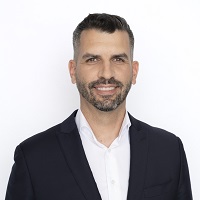
Guest
Jocelyn Doucet
CEO and founder, Pyrowave
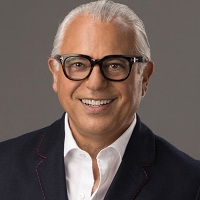
Host
Joseph Mimran
CEO of Joseph Mimran & Associates Inc, founder of Club Monaco & Joe Fresh and former Dragon on CBC’s Dragons’ Den
Related resources

MyEDC gets you the answers you need
Join more than 30,000 Canadians who rely on MyEDC to grow their businesses with confidence.
Export support for cleantech companies
It’s time to share Canadian innovation with the world as clean technologies are growing across industries. Export Development Canada can help you confidently enter new markets, reduce financial risks and grow your business.
Export Guarantee Program
Let us work with your financial institution to help you get the financing you need.